
7 smart ways South African SMEs can boost profitability
Executive Summary
- Digital automation enhances financial accuracy and frees time for strategic growth.
- Strict cash flow management and separation of personal and business finances are essential.
- Cost audits, emergency reserves, revenue diversification, and expert advice strengthen long-term profitability.
7 smart ways South African SMEs can boost profitability
South African SMEs operate on thin profit margins that average as low as 1.3%, leaving almost no room for financial mistakes. Every rand lost to inefficiency, poor cash flow management, or avoidable errors directly cuts into your ability to grow, hire, and compete. In 2026, the SME landscape demands more than hard work. It demands smarter financial decisions backed by evidence, technology, and expert guidance. This article covers seven practical, proven strategies that help South African SME owners improve profitability from the inside out, without sacrificing the agility that makes small businesses powerful.
Table of Contents
- Adopt digital accounting and automation tools
- Implement strict cash flow tracking and separation of finances
- Conduct cost audits and optimize expenses
- Build emergency reserves and diversify revenue streams
- Seek professional financial advice and review regularly
- Why South African SMEs must rethink profitability strategies in 2026
- Partner with experts for next-level profitability
- Frequently asked questions
Key Takeaways
| Point | Details |
|---|---|
| Leverage digital tools | Automation and cloud accounting drive efficiency, reduce errors, and free up resources for growth. |
| Master cash flow tracking | Keep business funds separate and use cash flow forecasts to avoid shortfalls and build resilience. |
| Cut costs strategically | Improve profitability by optimizing expenses, auditing regularly, and embracing energy efficiency. |
| Diversify and build reserves | Create emergency funds and widen revenue streams to protect against market shocks and unlock bold opportunities. |
| Seek expert guidance | Regular professional advice and reviews help SMEs navigate risks, adapt plans, and sustain long-term profitability. |
Adopt digital accounting and automation tools
Technology is no longer a luxury for large corporations. For South African SMEs fighting thin margins, digital accounting transformation is one of the fastest paths to measurable profit improvement. Automating routine tasks like invoicing, bank reconciliation, and monthly reporting removes the human error risk that quietly bleeds money from your business every month.
The numbers support the move. 58% of SMEs report that cloud tools help them better manage finances, while 40% reduce their administrative burden through automation. That is not a marginal gain. That is hours per week returned to you for strategic work.
Here is what digital automation typically handles for SMEs:
- Automatic invoice generation and payment reminders
- Real-time bank feed reconciliation
- Automated VAT and tax calculations
- Monthly management reports generated without manual input
- Expense categorization and flagging of anomalies
The cloud accounting benefits extend beyond time savings. You gain live visibility into your financial position, meaning you can make decisions based on current data rather than month-old spreadsheets.
| Task | Manual approach | Automated approach |
|---|---|---|
| Invoice processing | 2-4 hours per week | 15 minutes review |
| Bank reconciliation | 3-5 hours per month | Automated daily sync |
| VAT calculation | Error-prone manual entries | System-generated and auditable |
| Financial reporting | Week-end manual compilation | Real-time dashboard access |
Pro Tip: If your business handles significant cash transactions, such as a retail shop or food outlet, look for accounting automation software that supports hybrid cash-digital workflows. A fully cloud-only solution can create blind spots in your reporting if cash is not captured accurately.
Start with one automation tool, master it, and then layer in additional features. Trying to automate everything at once often results in poor adoption and wasted spend.
Implement strict cash flow tracking and separation of finances
Once digital tools are adopted, disciplined cash flow management becomes the foundation for every profitability improvement you will make. Without it, even a profitable business on paper can run out of money in practice. Cash flow is the lifeblood of your SME, and tracking it with precision is non-negotiable.
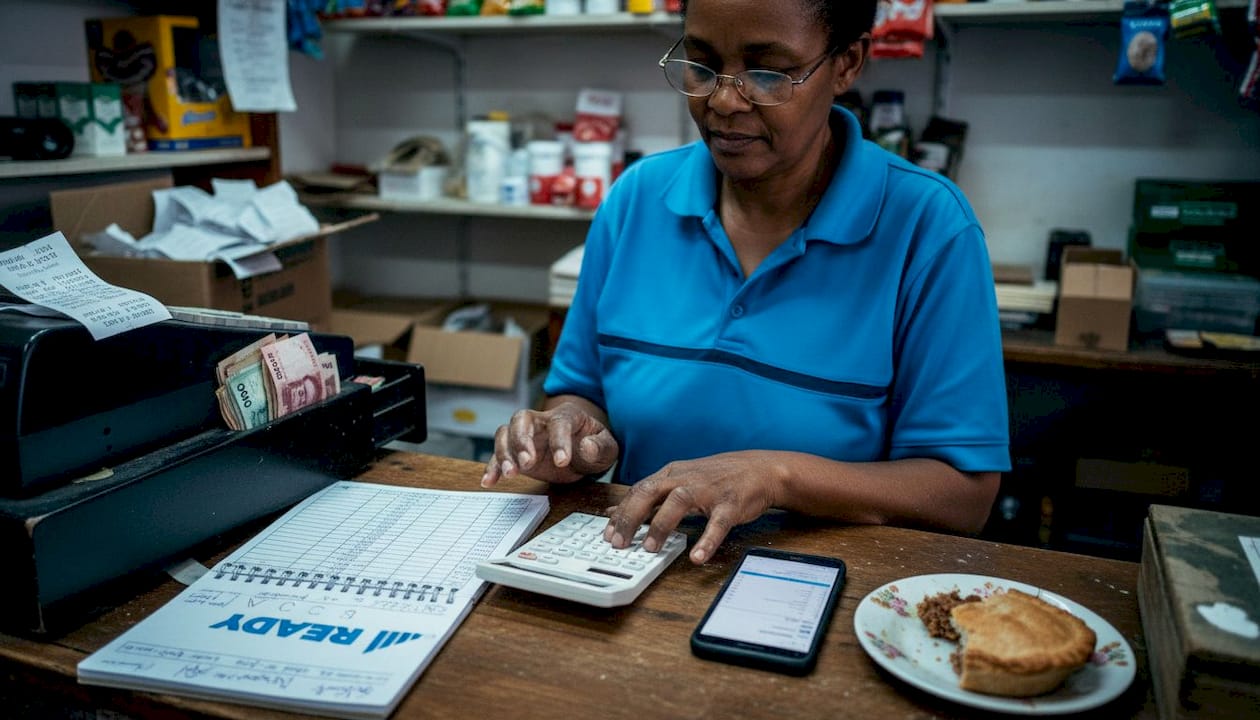
The risk is real. A staggering 72% of SA SMEs drew on personal savings to survive a cash flow crisis at some point. That blending of personal and business finances is one of the most dangerous habits an SME owner can have. It distorts your true financial picture and puts your personal wealth at risk.
Here is how to build a strong cash flow foundation:
- Open a dedicated business bank account immediately if you have not already.
- Set up a weekly cash flow review using a simple tracker or your accounting software dashboard.
- Create a 13-week rolling cash flow forecast, updated weekly, to anticipate shortfalls before they hit.
- Pay yourself a fixed salary from the business rather than drawing ad hoc amounts.
- Build a cashflow management guide into your monthly financial routine to benchmark your patterns.
“The businesses that survive economic shocks are not necessarily the most profitable ones. They are the ones who saw the cash gap coming and planned around it.”
For retail and tavern owners dealing heavily in cash, the cash flow solutions must include a physical cash log that syncs with your digital accounts daily. Do not let a digital-only mindset create a gap between your real position and your reported one.
Pro Tip: Review your financial management best practices every quarter. As your revenue grows, your cash flow complexity grows with it. What worked at R500K annual turnover may not work at R5M.
Formalizing your finances, including proper bookkeeping and tax compliance through solid tax planning strategies, also improves your access to business funding. Lenders and investors want clean records. Clean records start with disciplined cash flow tracking.
Conduct cost audits and optimize expenses
With cash flow management established, the next lever is reducing unnecessary costs while protecting the spending that drives growth. Many SMEs overpay for services they barely use, carry excess inventory, or lose money to energy inefficiency without ever measuring the impact.
Automating routine administrative tasks saves hours weekly and reduces salary costs tied to manual work. This matters enormously in a market where more than 50% of South African SMEs are at risk of closure due to financial pressure. Cutting the right costs is not about being cheap. It is about being precise.
Key areas to audit in your SME:
- Subscriptions and software: Cancel tools your team does not use actively.
- Supplier contracts: Renegotiate at least once per year, especially for consumables and raw materials.
- Inventory: Slow-moving stock ties up capital. Optimize purchasing cycles based on actual sales velocity.
- Energy costs: Install energy-efficient lighting and consider solar backup to reduce load-shedding losses.
- Staffing: Automation can reduce hours spent on admin, allowing reallocation rather than retrenchment.
| Cost category | Common waste | Optimization action |
|---|---|---|
| Software subscriptions | Unused or duplicate tools | Annual audit, consolidate platforms |
| Inventory | Overstocking slow movers | Demand-based purchasing cycles |
| Energy | High municipal rates plus generator diesel | Solar or inverter investment |
| Supplier costs | Stale contracts | Annual renegotiation with market benchmarks |
A solid financial audit guide walks you through the process of reviewing your records systematically rather than guessing where the leaks are. Combine this with the optimization standards relevant to your sector, and you build a repeatable process rather than a once-off exercise.
Statistic to note: Energy disruption and currency volatility are two of the biggest unpredictable cost drivers for South African SMEs in 2026. Scenario planning for both, meaning having a documented response plan ready, reduces reactive spending when they hit.
Build emergency reserves and diversify revenue streams
After lowering costs, the next step toward lasting profitability is strengthening your resilience. Two tools do this better than almost anything else: emergency reserves and revenue diversification. Together they protect you from the unpredictable shocks that end businesses prematurely.
The urgency is clear. 70% of SMEs expect to need financing within the next six months, which means most are operating without adequate financial buffers. Waiting until you need a loan to build reserves is too late. You end up paying interest on money that should have been sitting in your business savings account.
Here is how to build and sustain your financial buffer:
- Target a reserve equal to three to six months of fixed operating expenses.
- Treat reserve contributions like a fixed monthly expense, not an optional extra.
- Keep reserves in a separate, interest-bearing business account to avoid accidental spending.
- Review the reserve amount annually as your cost base changes.
- Follow emergency savings strategies specific to business contexts, not just personal finance advice.
Pro Tip: Once you have reserves in place, they give you the confidence to make bold moves. Negotiating better supplier terms, taking on a larger contract, or investing in staff training becomes less risky when you know your operational costs are covered for several months.
Revenue diversification means spreading your income across multiple products, services, or customer segments. A manufacturer who also offers installation services has two income streams. A retailer who adds an online store reaches customers outside their geographic area. A consultant who creates a digital course earns while sleeping. The financial resilience best practices for South African SMEs consistently recommend diversification as a core strategy, not an afterthought.
Think carefully about which new revenue streams align with your existing capabilities. The most profitable diversification builds on what you already do well, rather than launching into unfamiliar territory that dilutes your focus.
Seek professional financial advice and review regularly
Finally, ongoing review and expert advice help South African SMEs adapt and thrive amid shifting challenges. Many owners delay seeking help until a crisis forces the issue. By then, the options are narrower and more expensive. The smarter move is to build professional financial guidance into your operating rhythm before problems emerge.
The advice is consistent across the industry: build emergency reserves, diversify revenue, and engage professional financial guidance proactively. These three actions compound over time when applied together.
Here is how to structure ongoing financial review as an SME:
- Schedule a quarterly financial review with your accountant or financial advisor.
- Use each review to assess risk-adjusted return on investment for your biggest spending categories.
- Benchmark your performance against sector averages to identify where you are underperforming.
- Update your 12-month financial forecast at each quarterly session.
- Revisit your financial positioning tips annually to ensure your strategy reflects current market conditions.
“The SMEs that grow in volatile environments are the ones who treat financial planning as an ongoing conversation, not an annual event they dread.”
Pro Tip: When choosing a financial advisor or accountant, look for someone with direct experience in your sector. An advisor who understands the specific cash flow patterns, tax implications, and cost structures of your industry adds dramatically more value than a generalist.
Formalization and compliance are not just legal obligations. They are strategic levers. A business with clean financials and proper tax compliance qualifies for better funding, attracts better clients, and builds more enterprise value over time. Use the business planning guide as a starting point for structuring your annual review cycle, and build the habit of regular financial reassessment into your leadership calendar.
Why South African SMEs must rethink profitability strategies in 2026
Here is the uncomfortable truth most financial articles skip over: digital automation is essential, but it does not apply equally to every South African SME. A significant portion of this economy runs on cash. Taverns, spaza shops, hair salons, and informal retailers operate in environments where fully digital workflows create real gaps between reported and actual finances.
According to research on cash-heavy SA businesses, retail and tavern operators specifically need hybrid cash-digital management systems rather than assuming a cloud-first approach solves everything. Pushing purely digital solutions onto cash-dominant businesses without accounting for their operational reality sets them up to fail compliance audits and lose financial visibility rather than gain it.
The second blind spot is treating profitability strategies as universal templates. A construction SME dealing with project-based cash flows needs different tools than a subscription-based service business with predictable monthly revenue. Sector-specific, scenario-driven planning outperforms generic financial advice every time.
At Ready Accounting, we see this regularly. The SMEs who grow fastest are not the ones who adopted the most technology. They are the ones who matched the right modernization strategies to their actual operating environment and built hybrid, risk-aware financial systems that account for South Africa’s unique volatility.
Partner with experts for next-level profitability
Applying these seven strategies is far more effective with expert support behind you. At Ready Accounting, we work with scaling South African SMEs to replace manual financial processes with custom cloud infrastructure, real-time cash flow dashboards, and automation that actually fits your business model. Whether you need automation that improves cash flow, a clear starting point through our accounting automation guide, or help avoiding the common bookkeeping mistakes that silently cost SMEs thousands, we have the tools and expertise to help you move from reactive to strategic. Get in touch with our team to start engineering growth into your finance function.
Frequently asked questions
Why should my SME adopt digital accounting tools?
Digital tools streamline invoicing and reporting, reduce errors, and save admin time. With 58% of SMEs reporting better financial management through cloud platforms, the productivity and accuracy gains are well documented.
How can I separate my business and personal finances effectively?
Open a dedicated business bank account and pay yourself a fixed monthly salary rather than ad hoc drawings. Since 72% of SA SMEs have used personal savings to plug business gaps, this separation protects both your business and personal financial stability.
What are practical ways to cut costs without hurting growth?
Audit subscriptions, renegotiate supplier contracts annually, optimize inventory purchasing, and adopt energy-saving measures. Automation also reduces routine task hours significantly, freeing budget for growth-focused spending.
How much should I set aside for emergency reserves?
Aim for three to six months of fixed operating expenses held in a separate business account. This buffer shields you from the financing pressure that 70% of SMEs face within any given six-month window.
When should I seek professional financial advice?
Seek advice before major decisions like expansion, new funding, or entering a new market. Proactive guidance, framed around professional financial advice and regular strategy reviews, consistently outperforms reactive crisis management for South African SMEs.