

Dividends tax in South Africa: essential protocol for Scaling Companies 2026
Many small business owners in South Africa feel confused about dividends tax, unsure of who pays, how much, and what recent changes mean for their companies. This uncertainty can lead to compliance mistakes and missed opportunities for tax planning. In this guide, we clarify the dividends tax rate of 20%, exemptions, recent regulatory updates, and practical steps to manage dividends tax effectively in 2026. By the end, you will understand how to optimize your dividend payments while staying compliant with SARS requirements.
Table of Contents
- Understanding Dividends Tax: Rates And Liabilities
- Exemptions And Special Cases Relevant To Smes
- Recent Regulatory Changes And Compliance Requirements For Dividend Payments
- Practical Tips For Small Businesses To Manage Dividends Tax Effectively
- Discover Accounting Solutions Tailored For South African Small Businesses
Key takeaways
| Point | Details |
|---|---|
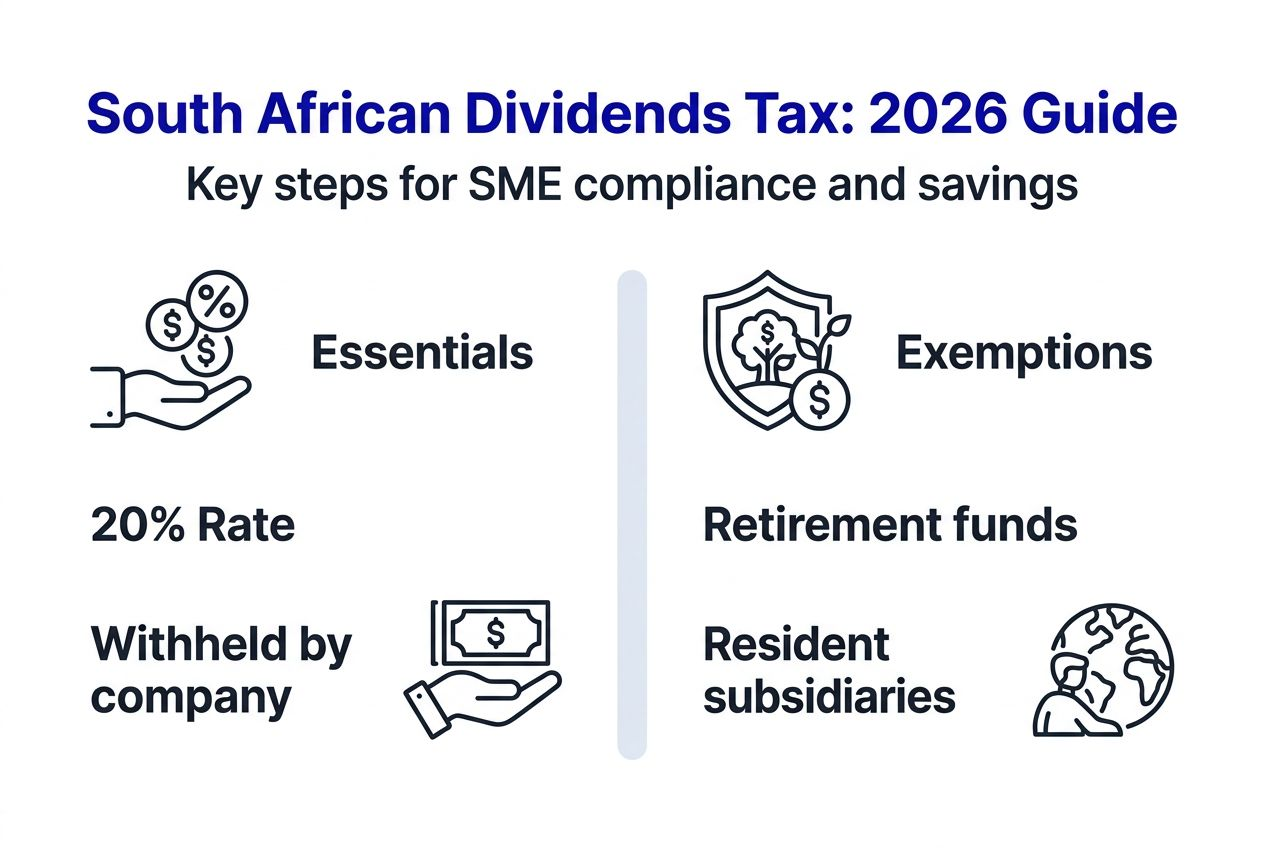
| Standard rate | Dividends tax in South Africa is 20% on dividend payments, withheld by the company before shareholders receive funds. |
| Who pays | The beneficial owner of the dividend is liable, but the company remits the tax to SARS. |
| Key exemptions | Dividends paid to registered retirement funds and certain resident shareholders may qualify for exemptions. |
| Recent changes | From October 2025, non-resident shareholders need SARS tax clearance for dividend remittances under new SARB rules. |
| Compliance tips | Keep detailed records, consult tax professionals, and integrate dividends tax planning into your overall tax strategy. |
Understanding dividends tax: rates and liabilities
Dividends tax is a withholding tax on dividend payments from companies to shareholders. The standard rate is 20% as of 2026, and it replaced the Secondary Tax on Companies in 2012. Understanding this mechanism is crucial for SME owners who distribute profits to shareholders.
When your company declares a dividend, it must withhold the tax before paying shareholders. The liability falls on the beneficial owner, but the company handles remittance to SARS. This system simplifies collection and ensures compliance at the source.
Here are the key aspects of how dividends tax works:
- The company paying the dividend deducts 20% before distributing funds to shareholders.
- The withheld amount must be paid to SARS by the company, usually within specific deadlines.
- Shareholders receive the net dividend after the 20% withholding.
- The company must maintain accurate records of each dividend payment and the tax withheld.
- Regulated intermediaries may also withhold dividends tax in certain situations involving listed shares.
Pro Tip: Ensure your accounting system accurately tracks dividend declarations and withholdings. This prevents errors when remitting to SARS and simplifies record keeping for audits. Consulting small business tax questions 2025 can help you understand broader tax obligations.
Exemptions and special cases relevant to SMEs
Not all dividends attract the 20% tax. South Africa’s tax law provides several exemptions that can significantly reduce your tax burden. Understanding these exemptions helps you plan dividend distributions more effectively.

Dividends paid to registered retirement funds are exempt from dividends tax. This exemption supports long term savings and retirement planning. If your company pays dividends to a pension or provident fund, no withholding applies.
For resident individuals, dividends are exempt from income tax but still subject to the 20% withholding at source. This means while the shareholder does not pay additional income tax on dividends received, the company must still withhold the dividends tax. Non-resident shareholders face different rules, often subject to double taxation agreements.
Key exemptions include:
- Dividends paid between South African resident companies within the same group are generally exempt.
- Dividends declared by REITs and companies in special tax regimes may have different treatment.
- Dividends in specie, where assets rather than cash are distributed, also trigger dividends tax based on market value.
- Public benefit organizations and certain exempt entities do not pay dividends tax on dividends received.
No deductions are allowed on expenses to produce foreign dividends. This rule means if your company receives foreign dividends, you cannot offset costs against that income for tax purposes. Proper documentation of exemptions is essential. Keep records proving the recipient qualifies for an exemption to satisfy SARS during audits. Explore year-end tax planning for SMEs to integrate dividends tax planning with your broader tax strategy.
Recent regulatory changes and compliance requirements for dividend payments
On 22 October 2025, SARB introduced stricter exchange control compliance for dividends paid to non-resident shareholders. This change affects SMEs with foreign investors and adds an important compliance step.
Under the new rules, companies must obtain SARS tax clearance certificates for non-resident shareholders before remitting dividends abroad. This requirement ensures that all tax obligations are settled before funds leave South Africa. The process involves submitting documentation to SARS and waiting for clearance.
These changes aim to tighten tax compliance and prevent revenue leakage. For SMEs, this means more administrative work when paying dividends to foreign shareholders. You must coordinate with your tax advisor and authorized dealer to ensure smooth processing.
Here are the key compliance steps for dividend remittances to non-residents:
- Declare the dividend and calculate the 20% withholding tax due.
- Apply to SARS for a tax clearance certificate for the non-resident shareholder.
- Submit required documentation including proof of dividend declaration and shareholder details.
- Wait for SARS to issue the clearance certificate, which can take several business days.
- Once clearance is obtained, process the dividend payment through your authorized dealer.
- Remit the withheld dividends tax to SARS within the prescribed timeframe.
- Maintain detailed records of the entire process for audit purposes.
Pro Tip: Start the tax clearance process early to avoid delays in dividend payments. Coordinate with tax consulting services to handle the paperwork efficiently and ensure compliance with both SARS and SARB dividend remittance rules.
Practical tips for small businesses to manage dividends tax effectively
Managing dividends tax does not have to be overwhelming. With the right approach, you can ensure compliance and optimize your tax position. Here are actionable steps tailored for SME owners.
First, consult a tax professional to understand how dividends tax impacts your specific business structure. Every company is different, and expert advice ensures you apply exemptions correctly and avoid penalties. A qualified advisor can also help you integrate dividends tax planning with your overall tax strategy.
Keep accurate, detailed records of every dividend payment and recipient. SARS requires documentation showing who received dividends, how much was paid, and the tax withheld. Use cloud accounting software to automate tracking and reduce errors. Explore record keeping requirements 2025 to understand what SARS expects.
Here are additional practical tips:
- Schedule dividend payments strategically to align with cash flow and tax planning objectives.
- Ensure timely remittance of withheld dividends tax to SARS to avoid interest and penalties.
- Regularly review SARS updates and regulatory changes affecting dividends tax.
- Train your finance team or bookkeeper on dividends tax compliance requirements.
- Use professional accounting services to handle complex scenarios like foreign shareholders or group structures.
Small to medium business owners should consult with a tax professional to understand the specific implications of dividends tax on their business structure and financial planning. Thorough record keeping and proactive compliance are essential to avoid costly mistakes.
By implementing these tips, you can manage dividends tax confidently and focus on growing your business. Consider leveraging tax saving strategies for SMEs to maximize your overall tax efficiency.
Discover accounting solutions tailored for South African small businesses
Managing dividends tax and broader accounting compliance can feel complex, but you do not have to handle it alone. Ready Accounting specializes in supporting small to medium businesses with tailored solutions that simplify financial management and ensure SARS compliance.
Our cloud accounting benefits streamline record keeping, making it easier to track dividend payments and withholdings accurately. With automated systems, you reduce errors and save time. Our tax consulting services provide expert guidance on dividends tax planning, exemptions, and regulatory changes, ensuring you stay compliant and optimize your tax position.
We also help you meet record keeping requirements with ease, so you are always audit ready. Whether you need help with bookkeeping, tax filings, or strategic financial planning, Ready Accounting is your trusted partner for smart, efficient financial management in South Africa.
Frequently asked questions
What is the current dividends tax rate in South Africa?
The dividends tax rate in South Africa is 20% as of 2026. This rate applies to most dividend payments from companies to shareholders, withheld at source before distribution.
Who is responsible for paying dividends tax to SARS?
While the beneficial owner of the dividend is liable for the tax, the company paying the dividend withholds and remits the tax to SARS. This withholding system ensures compliance at the point of payment.
Are there any exemptions to dividends tax for SMEs?
Yes, several exemptions exist. Dividends paid to registered retirement funds are exempt, as are dividends between resident companies in the same group. Understanding these exemptions can reduce your overall tax burden.
What are the new compliance requirements for paying dividends to non-resident shareholders?
From October 2025, companies must obtain SARS tax clearance for non-resident shareholders before remitting dividends abroad. This new SARB requirement adds a compliance step to ensure all tax obligations are settled.
How can small businesses ensure compliance with dividends tax regulations?
Keep detailed records of all dividend payments and tax withheld. Consult with a tax professional to tailor your compliance strategy. Use cloud accounting systems to automate tracking and ensure timely remittance to SARS to avoid penalties.
Can dividends tax be reduced through tax planning?
Yes, strategic tax planning can optimize your dividends tax position. By understanding exemptions, timing dividend payments, and structuring shareholder arrangements carefully, you can minimize tax liabilities. Professional advice is essential to navigate these opportunities effectively.
Recommended
- How to save tax in South Africa: smart strategies for SMEs in 2026 – Ready Accounting
- Top Tax Questions Small Business Owners Ask in 2025 – Ready Accounting
- Year-End Tax Planning Guide for Small Businesses – Ready Accounting
- Types of Accounting Services for SMEs in 2025: Your Guide – Ready Accounting
- Why Optimise Business Growth for Nigerian SMEs