

Execution Framework: Audit Financial Records: Easy Protocol for SA Businesses
Keeping track of financial records might look like a grind, but it is a non-negotiable for every South African business owner. You might expect the toughest part is slogging through paperwork and ticking compliance boxes. Turns out, businesses using cloud accounting can cut admin costs by up to 50% and stay more SARS-ready than most old-school bookkeepers ever manage. That single shift could decide whether you pay hefty fines or grow stronger with every audit cycle.
Table of Contents
- Understanding Financial Records And Compliance
- Step-By-Step Process To Audit Financial Records
- Key Tools And Cloud Solutions For South African Smes
- Tips For Accurate Reporting And Tax Readiness
Quick Summary
| Takeaway | Explanation |
|---|---|
| Maintain detailed financial records for compliance | Accurate records are crucial for legal adherence and protection against penalties in South Africa. |
| Adopt digital accounting solutions | Implementing cloud solutions can enhance accuracy and streamline financial record management significantly. |
| Conduct thorough audits regularly | Regular audits help identify compliance issues and offer insights for financial optimization. |
| Focus on SARS compliance requirements | Staying informed on SARS regulations ensures timely and accurate reporting, reducing the risk of audits or penalties. |
| Engage in strategic tax planning throughout the year | Proactive tax strategies can help leverage potential deductions and improve overall financial management. |
Understanding Financial Records and Compliance
Navigating the complex world of financial record management requires precision and strategic understanding. For South African businesses, maintaining accurate financial records is not just good practice – it’s a legal requirement that can protect your enterprise from potential penalties and ensure smooth operational transparency.
The Fundamentals of Financial Record Management
Financial records are the backbone of any successful business. These documents provide a comprehensive snapshot of your company’s financial health, tracking every transaction, expense, and income stream. According to SARS Guidelines, businesses must maintain detailed records for at least five years, enabling accurate tax reporting and potential audit readiness.
The core components of financial records include:
- Income Statements: Documenting all revenue streams
- Expense Receipts: Tracking all business expenditures
- Bank Statements: Providing transaction history and reconciliation evidence
- Payroll Records: Detailing employee compensation and tax contributions
Compliance Requirements in South Africa
Compliance is not optional for South African businesses. The IRS Recordkeeping Guide emphasizes that proper documentation protects businesses from potential legal challenges. In the South African context, this means adhering to regulations set by SARS, CIPC, and other governing bodies.
Key compliance areas include:
- VAT registration and reporting
- Annual financial statement preparation
- Tax return submissions
- Maintaining accurate payroll records
Businesses must ensure their financial records are not only comprehensive but also systematically organized. This means implementing robust cloud accounting systems, maintaining digital backups, and creating clear audit trails. Learn more about our comprehensive financial record management strategies.
Non-compliance can result in significant penalties, including financial fines and potential legal action. Small and medium enterprises are particularly vulnerable, making it crucial to develop a proactive approach to financial record management.
Best Practices for Record Maintenance
To maintain impeccable financial records, businesses should:
To help you implement and monitor best practices for financial record maintenance, here is a summary checklist based on the recommendations provided in this section.
| Best Practice | Implemented (Yes/No) | Notes/Responsible Person |
|---|---|---|
| Implement digital accounting solutions | ||
| Conduct regular internal audits | ||
| Train staff on record-keeping protocols | ||
| Use cloud storage for document preservation | ||
| Maintain a systematic filing system |
- Implement digital accounting solutions
- Conduct regular internal audits
- Train staff on proper record-keeping protocols
- Use cloud storage for secure document preservation
- Maintain a systematic filing system
By understanding and implementing these principles, South African businesses can transform financial record management from a mundane administrative task into a strategic business advantage. Proper documentation not only ensures legal compliance but provides valuable insights for strategic decision-making.

Step-by-Step Process to Audit Financial Records
Auditing financial records is a critical process that demands meticulous attention and systematic approach. For South African businesses, understanding the precise steps can transform a potentially overwhelming task into a manageable and insightful exercise. The goal is not just compliance but gaining strategic financial intelligence.
Below is a table outlining the step-by-step audit process for South African businesses, summarising each key phase and its main actions.
| Phase | Main Actions/Focus |
|---|---|
| Planning and Preparation | Collect financial statements, review prior audits, identify risk areas, set scope/timeline, assemble team |
| Detailed Examination & Evidence | Review income/expenses, check bank & payroll records, verify tax/invoices, audit accounting system |
| Reporting and Recommendations | Document findings, highlight compliance risks, give corrective actions, suggest improvements, share insights |
Planning and Preparation Phase
Before diving into the audit, comprehensive preparation is crucial. According to the Government Accountability Office Auditing Standards, the initial planning stage sets the foundation for a successful financial review. This involves gathering all relevant financial documents, understanding the business’s specific context, and establishing clear audit objectives.
Key preparation steps include:
- Collecting all financial statements
- Reviewing previous audit reports
- Identifying potential risk areas
- Establishing the audit scope and timeline
- Assembling the audit team or preparing for external auditors
Detailed Examination and Evidence Collection
The heart of the audit process lies in thorough examination and evidence collection. SARS guidelines emphasize the importance of maintaining comprehensive documentation. Auditors will systematically review:
- Income and expense records
- Bank statements
- Payroll documentation
- Tax submissions
- Invoices and receipts
- Accounting system integrity
During this phase, cross-referencing becomes critical. Every financial transaction must be traceable and verifiable. Read our comprehensive guide on financial statement analysis to understand the nuances of this process.
Reporting and Recommendations
The final stage of the audit involves synthesizing findings and providing actionable insights. This is not merely about identifying discrepancies but offering strategic recommendations for financial improvement. A robust audit report should include:
- Detailed findings
- Potential compliance risks
- Recommended corrective actions
- Financial performance insights
- Suggestions for process improvements
Businesses should view the audit as an opportunity for financial optimization rather than a compliance burden. By approaching the process systematically and maintaining transparent documentation, South African enterprises can turn financial audits into valuable strategic tools.
Remember that while the process might seem complex, breaking it down into manageable steps makes financial auditing achievable for businesses of all sizes. Consistent, methodical approach coupled with professional guidance can transform your financial record management from a challenge to a competitive advantage.
Key Tools and Cloud Solutions for South African SMEs
The digital revolution has transformed financial record management for South African small and medium enterprises (SMEs). Cloud accounting solutions have emerged as game-changing tools that simplify complex financial processes, enhance accuracy, and provide real-time insights into business performance.
Essential Cloud Accounting Platforms
Modern cloud solutions offer SMEs unprecedented flexibility and efficiency in managing financial records. According to Gartner’s Cloud Accounting Research, businesses using cloud platforms can reduce administrative costs by up to 50% and improve data accuracy significantly.
Key features to look for in cloud accounting tools include:
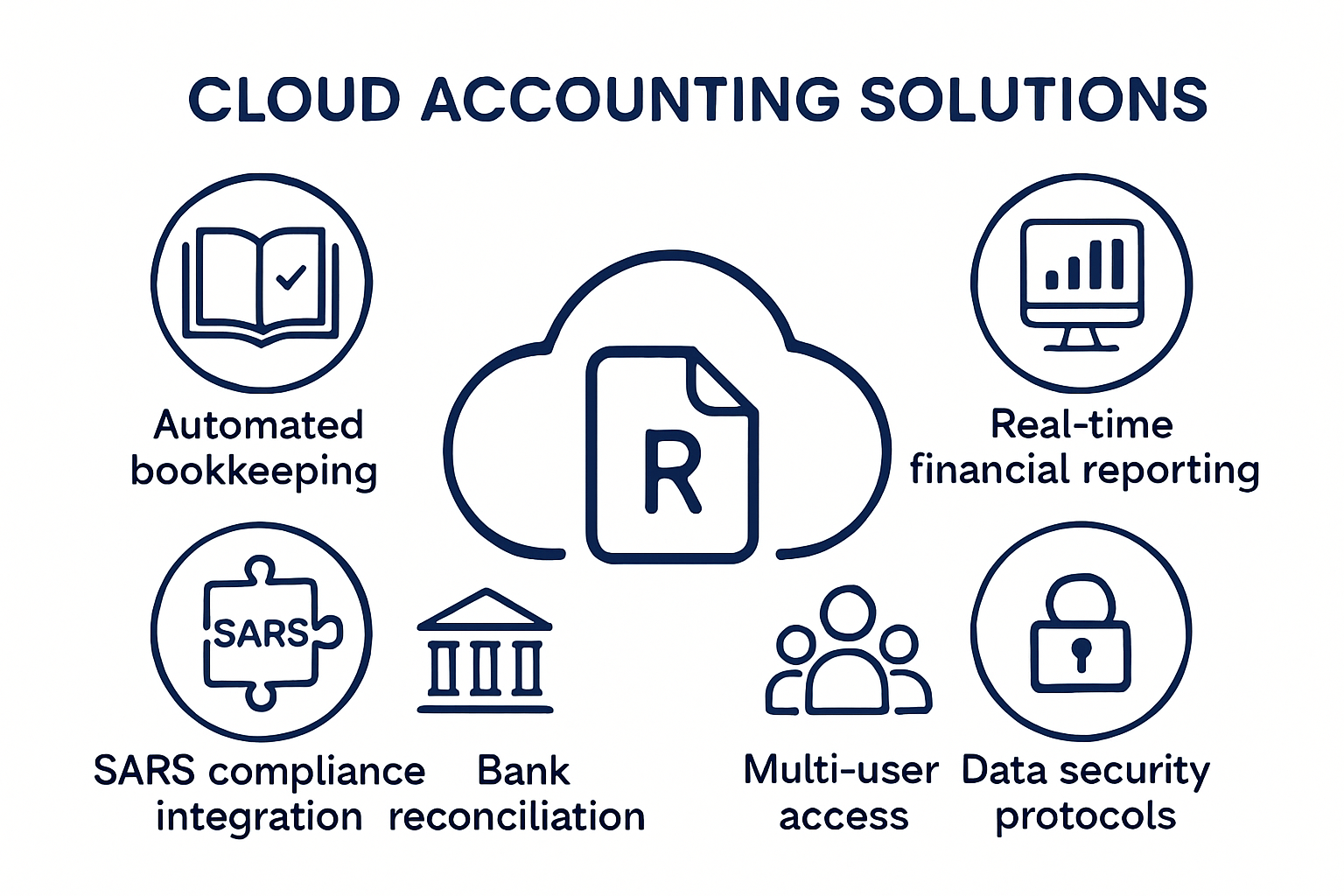
- Automated Bookkeeping: Reduces manual data entry errors
- Real-Time Financial Reporting: Instant access to financial insights
- SARS Compliance Integration: Automatic tax calculation and submission readiness
- Bank Reconciliation: Seamless transaction tracking
- Multi-User Access: Enables collaborative financial management
Security and Compliance Considerations
Cloud solutions for South African businesses must prioritize data security and regulatory compliance. POPI Act Guidelines mandate strict data protection protocols. When selecting a cloud accounting platform, businesses should evaluate:
- Data encryption standards
- Local data storage options
- Multi-factor authentication
- Regular security updates
- Compliance with South African financial regulations
Learn more about how cloud accounting can transform your business operations, enabling more strategic financial management.
Integration and Scalability
The most effective cloud solutions offer seamless integration with existing business systems. This means connecting payroll, inventory management, invoicing, and reporting platforms into a unified financial ecosystem. For South African SMEs, this translates to:
- Reduced administrative overhead
- Enhanced financial visibility
- Faster decision-making capabilities
- Scalable solutions that grow with your business
- Simplified compliance and reporting
Choosing the right cloud accounting tool is not just about technology – it’s about selecting a strategic partner that understands the unique challenges of South African businesses. By investing in robust, secure, and flexible cloud solutions, SMEs can transform financial record management from a complex challenge into a competitive advantage.
Remember that technology is only as effective as its implementation. Training your team, establishing clear protocols, and regularly reviewing your digital financial infrastructure will ensure you maximize the potential of these powerful cloud accounting tools.
Tips for Accurate Reporting and Tax Readiness
Accurate financial reporting and tax readiness are critical components of successful business management for South African enterprises. Maintaining precise records and staying proactive about tax compliance can prevent costly penalties and provide strategic financial insights.
Systematic Record Maintenance
Proper documentation forms the foundation of accurate financial reporting. According to the IRS Recordkeeping Guidelines, businesses must maintain comprehensive and organized financial records. For South African businesses, this means creating a systematic approach to document preservation and tracking.
Key strategies for systematic record maintenance include:
- Digitizing all financial documents
- Creating consistent filing protocols
- Implementing regular document review processes
- Establishing clear record retention timelines
- Using cloud storage with secure backup systems
SARS Compliance and Reporting Essentials
Navigating SARS reporting requirements demands precision and understanding. SARS Record-Keeping Rules emphasize the importance of accurate and timely financial documentation. Businesses must be prepared to provide detailed financial information during tax assessments.
Critical compliance areas to focus on:
- VAT registration and periodic submissions
- Income tax return preparations
- Payroll tax documentation
- Expense verification and deduction substantiation
- Maintaining a clear audit trail
Strategic Tax Planning and Preparation
Effective tax readiness goes beyond mere compliance – it’s about strategic financial management. Year-End Tax Planning Guide highlights the importance of proactive tax strategies that can optimize your financial position.
Recommendations for strategic tax preparation:
- Conduct mid-year financial reviews
- Track potential tax deductions throughout the year
- Understand industry-specific tax incentives
- Maintain separate business and personal financial records
- Consult with tax professionals regularly
Successful tax readiness requires a holistic approach that combines meticulous record-keeping, proactive compliance, and strategic financial planning. By implementing robust systems and staying informed about regulatory requirements, South African businesses can transform tax preparation from a stressful obligation into a valuable financial management opportunity.
Remember that consistency is key. Regular training, staying updated on tax regulations, and leveraging technology can significantly streamline your financial reporting and tax compliance processes.
Frequently Asked Questions
What are the key components of financial records for South African businesses?
Financial records for South African businesses typically include income statements, expense receipts, bank statements, and payroll records. These components provide a comprehensive snapshot of a company’s financial health and are essential for tax compliance.
How can cloud accounting solutions benefit my business during an audit?
Cloud accounting solutions can significantly streamline financial record management by reducing administrative costs by up to 50%, enhancing data accuracy, and allowing for easy access to real-time financial insights, making the audit process more efficient.
What steps should I follow when planning an audit of financial records?
When planning an audit, gather all relevant financial statements, review previous audit reports, identify risk areas, establish the scope and timeline, and assemble your audit team. A comprehensive preparation phase sets the foundation for a successful audit.
How can I ensure compliance with SARS regulations during financial record audits?
To ensure compliance with SARS regulations, it is crucial to maintain accurate and up-to-date financial records, verify all income and expense documentation, ensure timely submissions of VAT and income tax returns, and keep clear audit trails for possible inspections.
Ready to Make Your Next Audit Effortless and Stress-Free?
Struggling with outdated spreadsheets or feeling anxious about missing vital documents when SARS or your auditor comes knocking? This guide showed you that cloud accounting and well-organised records are no longer optional—they are the foundation of compliance, peace of mind, and true business insight for South African SMEs. So why risk penalties when there is a simpler way?
Let our experts at Ready Accounting help you streamline your financial records and set up secure cloud systems designed for South African businesses. From financial statement preparation to tailored tax consulting, we offer professional support every step of the way. Book a free consultation today to take control now, so your next audit is an advantage—not a threat.
Recommended
- SARS Record-Keeping Rules for Businesses – Ready Accounting
- How to Read Financial Statements: Easy Guide for 2025 – Ready Accounting
- How to Prepare Financial Statements for South African Businesses in 2025 – Ready Accounting
- Key Difference Between Accountant and Auditor for SA Businesses – Ready Accounting