

Execution Framework: Choose an Accountant for Your Business Success
Finding the right accountant for your business can feel overwhelming. There are thousands of professionals out there and every qualified accountant in South Africa must be registered with bodies like SAICA or SAIPA. Most people think just having the right qualification is enough. But the true difference comes from how well your accountant actually understands your business needs and walks you through your toughest financial headaches.
Table of Contents
- Step 1: Identify Your Accounting Needs Clearly
- Step 2: Research Potential Accountants Thoroughly
- Step 3: Evaluate Qualifications and Specializations
- Step 4: Schedule Consultations With Top Candidates
- Step 5: Compare Services and Fees Precisely
- Step 6: Make An Informed Decision And Finalize The Contract
Quick Summary
| Key Point | Explanation |
|---|---|
| 1. Clearly identify your accounting needs | Understand your unique financial requirements based on company size, industry, and growth stage to guide your accountant search. |
| 2. Research accountants thoroughly | Verify credentials and specializations through professional bodies and gather personal referrals for nuanced insights. |
| 3. Schedule consultations with candidates | Conduct interviews to assess communication skills and compatibility while discussing your financial requirements in detail. |
| 4. Compare services and fees precisely | Analyze the value and service scope provided by each candidate, not just their pricing to determine the best fit. |
| 5. Review contracts meticulously before signing | Examine contract details to ensure clarity on services, compliance, and data protection, establishing a solid partnership foundation. |
Step 1: Identify Your Accounting Needs Clearly
Choosing the right accountant begins with a crystal clear understanding of your specific business financial requirements. Every business operates uniquely, and your accounting needs will depend on factors like company size, industry complexity, growth stage, and regulatory environment. Before diving into potential accounting partnerships, take time to map out exactly what financial support your enterprise truly requires.
Start by conducting an honest assessment of your current financial management landscape. Are you struggling with cash flow tracking? Do you need comprehensive tax planning for SARS compliance? Perhaps you require support with payroll management, VAT registration, or preparing annual financial statements. Some businesses might need cloud accounting solutions that integrate seamlessly with existing systems, while others may need forensic financial cleanup or strategic financial consulting.
To streamline this process, create a detailed inventory of your financial pain points and aspirations. List out specific challenges such as bookkeeping backlogs, complicated tax scenarios, or the need for real-time financial reporting. Our guide on financial statement preparation can help you understand what documentation and insights you should expect from a professional accounting service.
Consider your business’s growth trajectory and potential future needs. A small startup will have dramatically different accounting requirements compared to an established medium enterprise. Assess whether you need basic bookkeeping, comprehensive financial strategy, or something in between.
Below is a table comparing different types of accounting services mentioned in the article, giving a quick overview to help you assess what might suit your business needs.
| Service Type | Description | Common Business Types | Complexity Level |
|---|---|---|---|
| Basic Bookkeeping | Day-to-day recording of financial transactions | Startups, Small businesses | Low |
| Payroll Management | Handling staff payments and statutory deductions | SMEs, Growing businesses | Medium |
| Tax Planning & SARS Compliance | Proactive tax strategy and regulatory submission | All business sizes | Medium-High |
| VAT Registration & Reporting | Managing VAT processes and returning submissions | Growing, VAT-eligible entities | Medium |
| Annual Financial Statements | Preparation of yearly statutory accounts | All business sizes | High |
| Cloud Accounting Solutions | Digital platforms that streamline processes | Tech-savvy, scalable firms | Medium |
| Forensic/Cleanup Services | Sorting out backlogs and correcting errors | Businesses with legacy issues | High |
| Strategic Financial Consulting | Advisory on business growth and financial health | Medium-large enterprises | High |
Successful identification of accounting needs means being realistic about your current capabilities and transparent about your financial goals. By taking this methodical approach, you set the foundation for finding an accounting partner who can truly support your business’s unique financial journey.
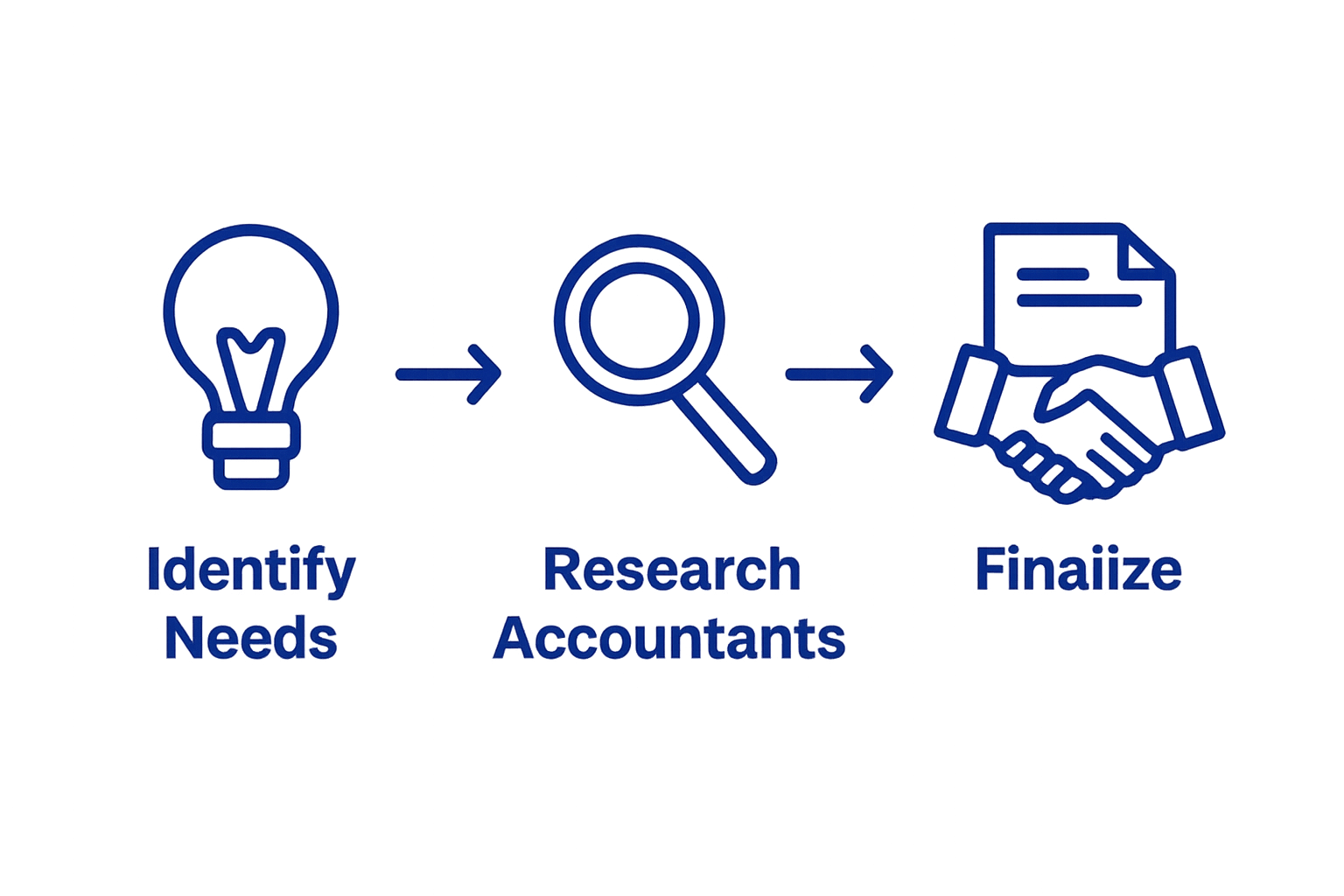
Step 2: Research Potential Accountants Thoroughly
Researching potential accountants requires a strategic and comprehensive approach that goes beyond simple online searches. Your goal is to find a professional who not only understands financial management but also aligns with your specific business requirements and professional values.
Begin by verifying professional credentials through recognized bodies like the South African Institute of Chartered Accountants (SAICA) and the South African Institute of Professional Accountants (SAIPA). Legitimate accountants should be registered with these professional bodies, which ensures they meet strict ethical and professional standards. Check their certification status, years of experience, and specialization areas that match your business sector.
Expand your research through multiple channels. Request recommendations from your professional network, industry associations, and trusted business colleagues. Personal referrals often reveal nuanced insights about an accountant’s reliability, communication style, and problem-solving capabilities that formal credentials cannot capture. Check out our guide on preparing for tax season to understand the kind of expertise you should seek in a potential accounting partner.
When evaluating potential accountants, conduct thorough interviews that go beyond technical qualifications. Discuss their experience with businesses similar to yours, their approach to financial challenges, and their familiarity with relevant South African tax regulations. Pay attention to their communication skills, responsiveness, and willingness to explain complex financial concepts in straightforward language.
Key verification steps include requesting and thoroughly reviewing references, examining their track record with previous clients, and understanding their technological capabilities. Modern accountants should demonstrate proficiency with cloud accounting platforms, advanced financial reporting tools, and digital compliance systems.
Here is a checklist table summarising key steps and checks to use when researching and verifying accountants, helping ensure you do not miss any critical verification points along the way.
| Verification Step | Purpose | Recommended Action |
|---|---|---|
| Check Professional Registration | Confirm legitimacy and professionalism | Verify SAICA/SAIPA membership |
| Review Industry Specialisation | Ensure relevant sector knowledge | Ask for similar client experience |
| Request References | Gauge reliability and track record | Contact past/current clients |
| Evaluate Technological Proficiency | Assure modern process handling | Inquire about digital tools used |
| Assess Communication Skills | Build smoother, clear professional rapport | Note responsiveness and clarity |
| Review Problem-solving Approach | Resolve complex financial scenarios | Ask about past challenges managed |
| Examine Data Protection Measures | Secure sensitive financial information | Discuss cybersecurity protocols |
Step 3: Evaluate Qualifications and Specializations
Evaluating an accountant’s qualifications goes far beyond simply checking academic credentials. Your objective is to find a professional whose expertise precisely matches your business’s unique financial landscape and strategic objectives. This step requires a nuanced approach that considers professional certifications, industry-specific experience, and specialized skills.
Professional certifications are your first critical checkpoint. In the South African context, look for accountants registered with recognized bodies like the South African Institute of Chartered Accountants (SAICA) or the South African Institute of Professional Accountants (SAIPA). These organizations ensure members maintain rigorous professional standards and continue their professional development. A registered professional signals commitment to ethical practices and ongoing learning.
Our guide on accounting automation highlights the importance of technological proficiency alongside traditional qualifications. Modern accountants should demonstrate skills in cloud accounting platforms, advanced financial reporting tools, and digital compliance systems. Request evidence of their technological capabilities and how they leverage modern tools to enhance financial management.
Industry specialization matters significantly. An accountant with deep experience in your specific business sector will understand nuanced financial challenges and regulatory requirements unique to that industry. For instance, a retail business will have different accounting needs compared to a manufacturing enterprise or a professional services firm. Ask potential accountants about their experience with businesses similar to yours, request case studies, and discuss how their specialized knowledge can provide strategic financial insights.
Verification involves more than reviewing certificates. Conduct comprehensive interviews that explore their practical experience, problem-solving approach, and understanding of South African tax regulations. Ask about their track record handling complex financial scenarios, their approach to proactive tax planning, and how they stay updated with changing financial legislation. A truly exceptional accountant will not just process numbers but provide strategic financial guidance that supports your business’s growth and sustainability.
Step 4: Schedule Consultations with Top Candidates
Scheduling consultations transforms your accountant search from theoretical research into a practical evaluation process. This critical step allows you to assess potential accountants beyond their paperwork, giving you direct insight into their communication skills, professional approach, and compatibility with your business needs.
Preparation is key before these consultations. Compile a comprehensive list of questions that probe beyond surface-level qualifications. Focus on understanding their practical experience, problem-solving strategies, and specific approaches to financial challenges unique to your business sector. Prepare documentation that illustrates your current financial landscape, including recent financial statements, tax returns, and specific areas where you seek professional support. Our guide on reading financial statements can help you organize these materials effectively.
When scheduling consultations, request both virtual and in-person meeting options. Many professional accountants now offer flexible engagement methods, allowing you to choose the most comfortable format. During initial contact, pay attention to their responsiveness, communication clarity, and willingness to accommodate your scheduling preferences. These early interactions provide subtle yet significant insights into their professional demeanor and client service approach.
During consultations, create a structured yet conversational environment that allows genuine professional assessment.
Discuss not just technical capabilities but also their understanding of your business goals, growth strategies, and potential financial challenges. Ask about their experience with businesses similar to yours, their approach to tax planning, and how they stay updated with changing financial regulations. Watch for accountants who ask insightful questions about your business, demonstrating genuine interest and strategic thinking beyond mere number processing.
Conduct these consultations with multiple candidates to ensure comprehensive comparison. Take detailed notes, assess their communication style, and evaluate how comfortable you feel discussing complex financial matters with each professional. The right accountant will not just manage your finances but become a trusted strategic partner in your business’s financial journey.
Step 5: Compare Services and Fees Precisely
Comparing accounting services and fees requires a strategic approach that looks beyond simple price tags. Your goal is to understand the comprehensive value each potential accountant brings to your business, balancing cost-effectiveness with professional expertise and service quality.
Detailed fee structures are more than just numbers. Request comprehensive written proposals from each candidate that break down their pricing model, including hourly rates, fixed package fees, and any additional charges for specific services. Explore our guide on understanding accounting service costs to gain deeper insights into typical pricing structures in the South African market.
Pay close attention to the scope of services included in each proposal. Some accountants offer bundled packages that might seem more expensive initially but provide significant value through comprehensive support. Look for transparent pricing that includes key services like annual financial statement preparation, tax planning, SARS compliance, VAT registration support, and ongoing financial consultation. Cheaper is not always better when it comes to financial management.
Evaluate the pricing in context of your specific business needs. A startup might benefit from a more flexible, hourly-based arrangement, while an established enterprise might prefer a fixed monthly retainer that provides predictable financial support. Consider the complexity of your financial landscape, including factors like number of transactions, payroll requirements, and industry-specific regulatory challenges.
Beyond monetary considerations, assess the additional value each accountant brings. Look for professionals who offer proactive financial advice, demonstrate technological proficiency, and show a genuine understanding of your business goals. The right accountant is an investment in your business’s financial health, not just an expense. Request references, review their track record, and trust your instincts about which professional can truly support your strategic financial objectives. Remember, the cheapest option rarely translates to the most valuable partnership for your business’s long-term success.
Step 6: Make an Informed Decision and Finalize the Contract
Making the final selection of your accountant represents a pivotal moment in establishing a strategic financial partnership. This decision goes beyond simply choosing a service provider and involves creating a foundation for long-term financial collaboration and business growth.
Comprehensive contract review is non-negotiable. Scrutinize every detail of the proposed agreement, ensuring it explicitly outlines service scope, deliverables, communication protocols, fee structures, and performance expectations. Our guide on understanding financial services can provide additional insights into what a robust accounting contract should include.
Ensure the contract addresses critical elements specific to South African business regulations. This includes clear provisions for SARS compliance, VAT registration support, annual financial statement preparation, and tax planning strategies. Verify that the accountant’s professional credentials are current and that they remain registered with recognized bodies like SAICA or SAIPA. A well-constructed contract protects both parties and establishes clear boundaries and expectations.
Pay special attention to confidentiality and data protection clauses. Your financial information represents the lifeblood of your business, so the contract must include robust safeguards for data security. Discuss and document protocols for information sharing, digital file management, and emergency data recovery. Request specific details about their cybersecurity measures and how they protect sensitive financial documentation.
Before signing, trust your intuition alongside the factual evidence. The right accountant should not just meet technical requirements but also demonstrate a genuine understanding of your business’s unique financial landscape. Schedule a final consultation to discuss the contract details, ask clarifying questions, and ensure complete alignment of expectations. Your goal is to establish a partnership that provides strategic financial guidance, not just transactional number processing. A meticulously selected and contractually defined accountant becomes an invaluable ally in navigating your business’s financial future.

Ready to Find the Right Accountant for Your Business?
You have just read about how choosing the right accountant begins with identifying your specific needs from cash flow headaches to wanting sharper tax compliance and robust payroll management. Many South African business owners feel overwhelmed by complicated financial tools or the pressure to keep up with ever-changing regulations. If these challenges sound familiar and you want a partner who brings not only deep local expertise but also technology-driven solutions then Ready Accounting is here for you.

Don’t let uncertainty or outdated processes hold your business back. Our services include everything discussed in your article like financial statement preparation and expert bookkeeping cleanup all delivered with approachability and precision. Take control of your business’s future right now. See how our team can simplify your accounting and support your growth by booking a consultation through our main site at Ready Accounting. Let us help you turn financial complexity into clarity today.
Frequently Asked Questions
What factors should I consider when identifying my accounting needs?
Your accounting needs depend on your business size, industry complexity, growth stage, and regulatory requirements. Take inventory of financial pain points like cash flow tracking, tax planning, payroll management, and reporting requirements to understand what support you need.
How can I verify the credentials of a potential accountant in South Africa?
Verify qualifications through recognized bodies like the South African Institute of Chartered Accountants (SAICA) or the South African Institute of Professional Accountants (SAIPA). Confirm their certification status, years of experience, and any industry specializations they may have.
What questions should I ask during consultations with potential accountants?
During consultations, ask about their experience with businesses similar to yours, their approach to financial challenges, knowledge of South African tax regulations, and how they stay updated on financial legislation. Also, assess their communication style and problem-solving capabilities.
How can I compare fees and services offered by different accountants?
Request detailed written proposals from accountants that outline their fee structures and the scope of services included. Compare the comprehensiveness of their packages to assess value, considering both price and the strategic support they offer for your business needs.