

Execution Framework: Improve Financial Reporting for Better Decision-Making
Most small businesses think financial reports are just paperwork for the taxman or a box to tick at month-end. But the numbers tell a different story.
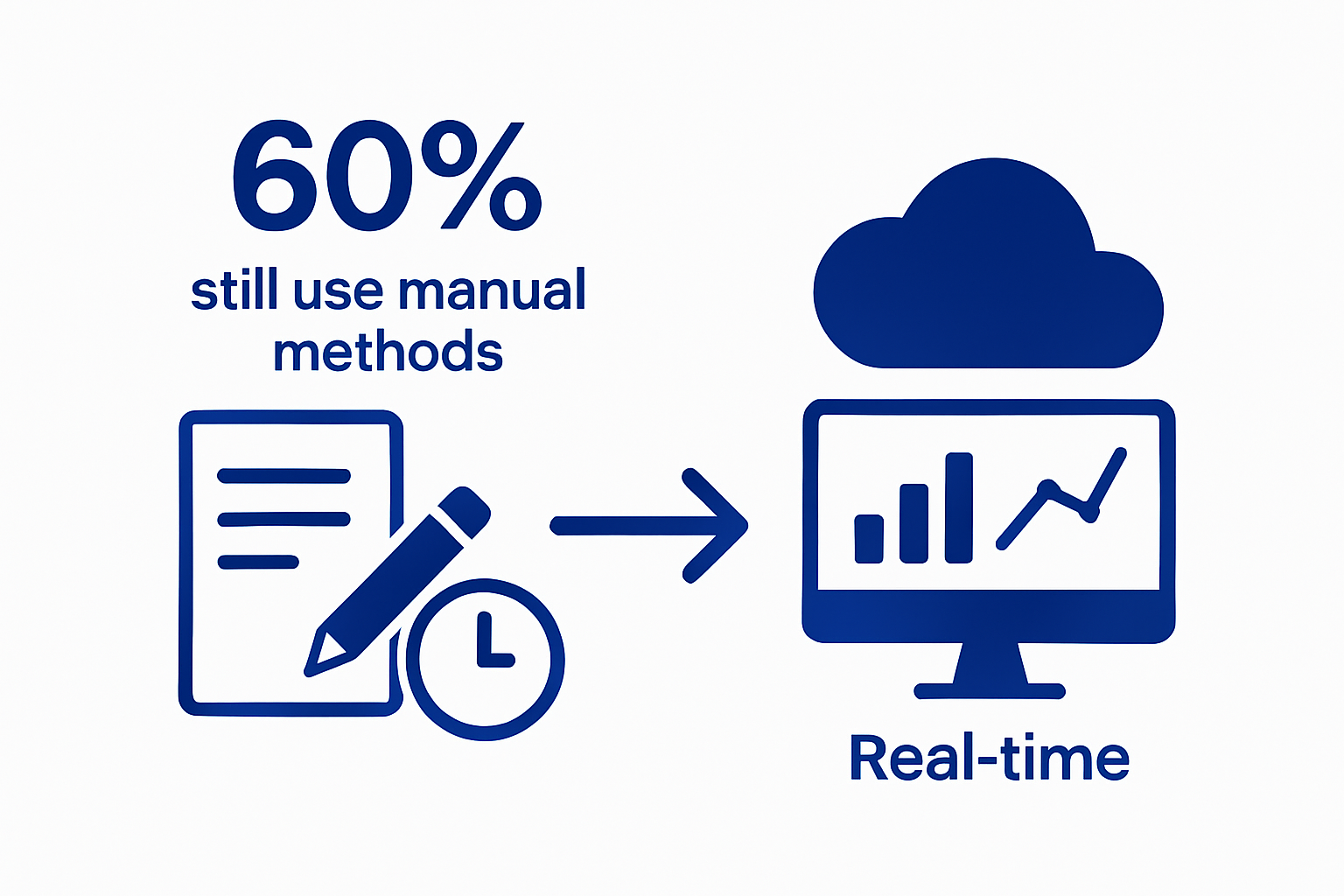
Roughly 60 percent of South African businesses still use outdated spreadsheets and manual processes for critical financial tasks. The surprise is these old methods don’t just waste time. They quietly undermine your decision-making and make it easy for mistakes to slip in.
Fixing this is easier than you think and can put control and insight back into your hands.
Table of Contents
- Step 1: Assess Your Current Financial Reporting Practices
- Step 2: Identify Key Financial Metrics To Track
- Step 3: Implement Cloud-Based Accounting Solutions
- Step 4: Automate Data Collection And Reporting Processes
- Step 5: Review And Improve Reporting Accuracy Regularly
Quick Summary
| Key Point | Explanation |
|---|---|
| 1. Assess current financial reporting | Evaluate your existing processes to identify gaps that may hinder decision-making and reporting effectiveness. |
| 2. Identify key financial metrics | Select relevant metrics that provide comprehensive insights into business performance, tailored to your specific context. |
| 3. Implement cloud-based accounting | Transition to cloud solutions for real-time financial insights, improved collaboration, and enhanced operational efficiency. |
| 4. Automate data collection processes | Streamline routine financial tasks using technology to reduce errors and improve the speed of reporting. |
| 5. Regularly review reporting accuracy | Establish a consistent review schedule to ensure your financial data remains reliable and supports informed decisions. |
Step 1: Assess Your Current Financial Reporting Practices
Improving financial reporting begins with a comprehensive assessment of your existing practices. This critical first step helps you understand where your current financial management stands and identifies potential gaps that could be hindering effective decision-making. By conducting a thorough evaluation, you’ll create a solid foundation for developing more robust and strategic financial reporting processes.
Start by gathering all your current financial documents, including annual financial statements, VAT returns, income tax submissions, and management reports. Review these documents critically, looking for inconsistencies, incomplete information, or areas where reporting lacks depth or clarity. Pay special attention to how your financial data is currently collected, processed, and presented. Are your reports providing a clear snapshot of your business’s financial health? Do they offer actionable insights or merely represent historical data?
Next, assess your existing reporting tools and systems. Many South African businesses rely on outdated spreadsheets or manual recording methods that are prone to errors and time-consuming. Consider whether your current approach allows for real-time financial tracking and provides comprehensive visibility into your company’s financial performance. Learn more about modernizing your financial reporting to understand how technology can transform your approach.
A comprehensive assessment should also involve reviewing your reporting frequency and the stakeholders who receive these reports. Determine whether your current reporting cycle meets the needs of management, investors, and regulatory bodies like SARS. Identify any gaps in communication or reporting that might be preventing timely and informed business decisions. Key verification points for this assessment include:
- Completeness of financial documentation
- Accuracy of financial data
- Timeliness of reporting
- Clarity and comprehensiveness of financial insights
Successful completion of this assessment means you have a clear understanding of your current financial reporting landscape, including its strengths and limitations. This knowledge will directly inform the subsequent steps in improving your financial reporting strategy, ensuring that future changes are targeted and meaningful.
Remember, assessment is not about criticism but about creating opportunities for improvement. Approach this step with an open mind and a commitment to enhancing your financial management capabilities.
The following table summarises the key verification points for each main step, serving as a practical checklist to ensure progress and success throughout the improvement process.
| Step | Verification Points |
|---|---|
| Assess Current Reporting | Completeness of documentation, data accuracy, timeliness, and reporting clarity |
| Identify Key Metrics | Relevance to business, actionable insights, consistency over time, compliance with benchmarks and SARS |
| Cloud-Based Accounting | Accurate data migration, comprehensive user training, seamless integration, enhanced reporting and real-time insights |
| Automate Processes | Accurate imports, consistent formats, time saved, improved compliance |
| Review & Improve Accuracy | Data consistency, timely issue resolution, regulatory alignment, robust documentation |
Step 2: Identify Key Financial Metrics to Track
Identifying the right financial metrics is crucial for transforming your financial reporting from a passive record-keeping exercise to a powerful decision-making tool. This step focuses on selecting metrics that provide meaningful insights into your business’s financial health, performance, and potential growth opportunities. The goal is to move beyond generic reporting and develop a targeted approach that highlights your company’s unique financial dynamics.
Begin by understanding the core financial metrics that matter most for your specific business context. Profitability metrics like net profit margin, gross profit margin, and return on investment are fundamental indicators of your company’s financial performance. Cash flow metrics are equally critical, particularly for South African businesses navigating complex economic landscapes. Explore comprehensive cash flow insights to understand how these metrics can transform your financial strategy.
Consider developing a comprehensive metrics dashboard that captures both financial and operational performance indicators. This might include tracking expenses, revenue growth, customer acquisition costs, and liquidity ratios. For VAT-registered businesses, monitoring VAT collections, input tax credits, and compliance metrics becomes especially important. Integrate metrics that reflect not just historical performance but also provide forward-looking insights that can guide strategic planning.
Your selected metrics should offer a holistic view of financial performance. Key verification points for this step include:
- Relevance of selected metrics to your business model
- Ability to generate actionable insights
- Consistency and comparability of metrics over time
- Alignment with industry benchmarks and SARS reporting requirements
Successful metric identification means you have a clear, focused set of indicators that provide meaningful snapshots of your financial health. These metrics will serve as the foundation for more sophisticated financial reporting and strategic decision-making, enabling your business to respond proactively to changing financial conditions.
Step 3: Implement Cloud-Based Accounting Solutions
Implementing cloud-based accounting solutions represents a transformative step in modernizing your financial reporting process. This approach moves your financial management from traditional, static spreadsheets to dynamic, real-time platforms that provide comprehensive insights and enhanced collaboration capabilities. Cloud accounting isn’t just a technological upgrade – it’s a strategic approach to financial management that can significantly improve your business’s operational efficiency.
Begin by researching cloud accounting platforms specifically designed for South African businesses. Look for solutions that integrate seamlessly with local tax requirements, including SARS compliance, VAT tracking, and payroll management. Discover how cloud accounting can revolutionize your financial processes and understand the nuanced benefits for your specific business context. When selecting a platform, prioritize solutions that offer robust security features, easy data migration, and intuitive user interfaces that will encourage adoption across your team.
The implementation process requires careful planning and strategic execution. Start by conducting a comprehensive data audit of your existing financial records. Prepare to migrate historical financial data to the new cloud platform, ensuring accuracy and completeness during the transfer. Consider working with an accounting professional who can guide you through the migration process, help configure the system to your specific business needs, and provide training for your team. **Successful implementation means more than just switching software – it’s about creating a more transparent, accessible, and actionable financial reporting ecosystem.
**
Key verification points for successful cloud accounting implementation include:
- Accurate data migration from existing systems
- Comprehensive user training and system understanding
- Seamless integration with existing business processes
- Enhanced reporting capabilities and real-time financial insights
Remember that implementing cloud-based accounting is an ongoing process. Continuously evaluate the platform’s performance, seek feedback from your team, and be prepared to make adjustments. This adaptive approach ensures that your financial reporting remains agile, accurate, and aligned with your business’s evolving needs.
Step 4: Automate Data Collection and Reporting Processes
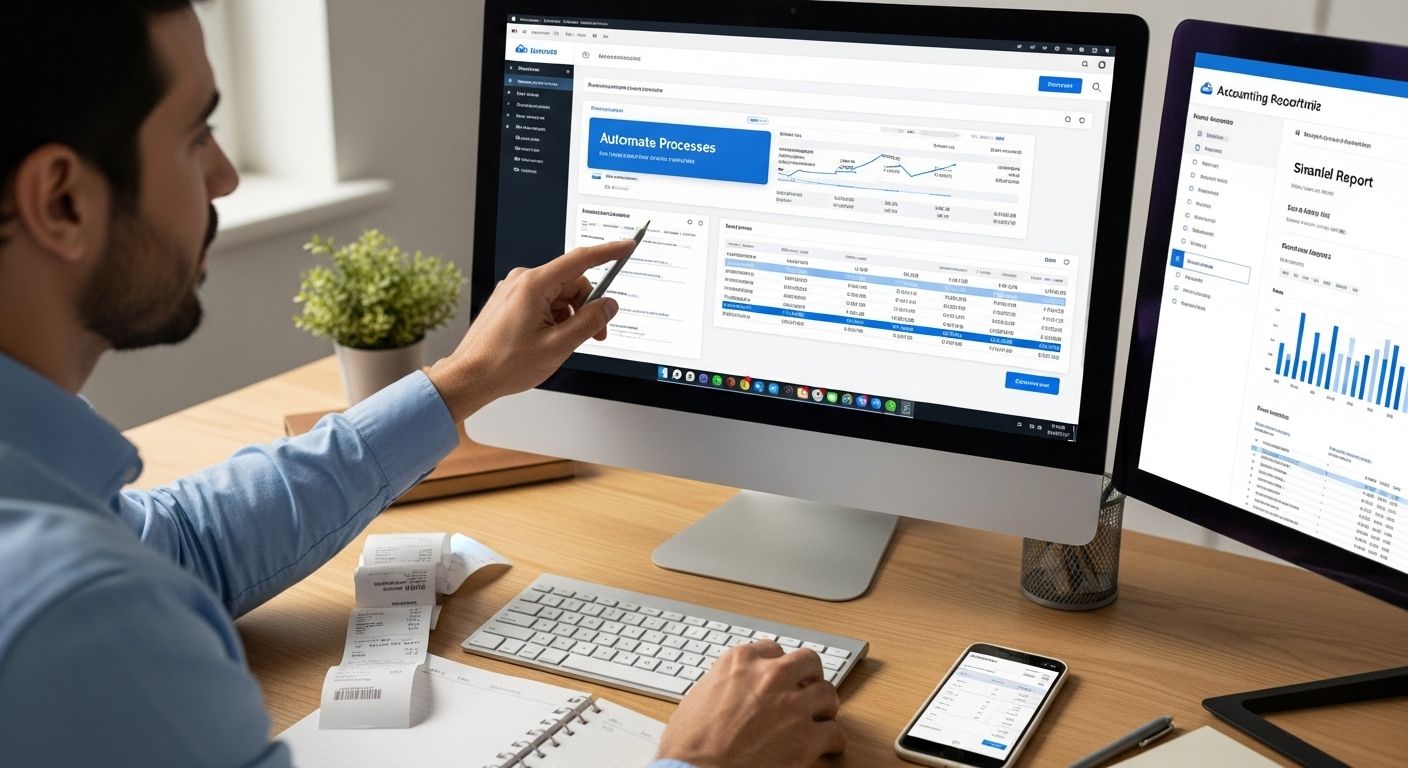
Automating data collection and reporting processes represents a critical transformation in financial management, enabling businesses to move beyond manual, time-consuming record-keeping towards intelligent, real-time financial insights. This step is about leveraging technology to streamline your financial reporting, reduce human error, and create more responsive decision-making mechanisms.
Begin by identifying repetitive financial tasks that consume significant administrative time. These typically include expense tracking, invoice processing, bank reconciliation, and generating standard financial reports. Learn more about strategic accounting automation to understand how technology can simplify complex financial workflows. Look for cloud-based accounting platforms with robust automation features that integrate seamlessly with your existing financial systems and can handle South African tax and regulatory requirements.
Implementation requires a methodical approach. Start by mapping out your current financial processes and identifying specific areas where automation can add the most value. Configure your chosen platform to automatically import bank statements, categorize transactions, generate recurring reports, and flag unusual financial activities. For VAT-registered businesses, prioritize solutions that can automatically track input and output tax, generate precise VAT returns, and maintain SARS compliance. Effective automation isn’t about replacing human oversight but enhancing your team’s ability to focus on strategic financial analysis rather than mundane data entry.
Your automation implementation should include verification of the following critical points:
- Accuracy of automated data imports and transaction categorizations
- Consistency of financial reporting formats
- Reduction in manual data entry time
- Enhanced compliance with local financial regulations
Successful automation transforms your financial reporting from a reactive record-keeping exercise to a proactive, insight-driven process. Remember that implementing automation is an iterative journey. Continuously review and refine your automated systems, train your team to leverage these new tools effectively, and remain adaptable to technological advancements in financial reporting.
Step 5: Review and Improve Reporting Accuracy Regularly
Regular review and improvement of financial reporting accuracy is the cornerstone of maintaining reliable and actionable financial insights. This critical step transforms financial reporting from a static documentation process into a dynamic, continuously refined strategic tool. By implementing systematic review mechanisms, businesses can identify potential errors, detect emerging trends, and ensure their financial data remains a trustworthy foundation for decision-making.
Establish a consistent review schedule that aligns with your business cycle and regulatory requirements. This might involve monthly reconciliations, quarterly comprehensive reviews, and annual deep-dive analyses. Explore comprehensive financial statement interpretation techniques to enhance your review capabilities. During these reviews, compare current financial reports against historical data, industry benchmarks, and projected financial models. Look for unexplained variances, unusual transaction patterns, or potential discrepancies that could indicate data entry errors or more significant financial irregularities.
Develop a structured approach to accuracy improvement that goes beyond simple error correction. Create a formal process for documenting and addressing discovered inconsistencies, ensuring that each identified issue becomes an opportunity for systemic improvement. For South African businesses, this means paying special attention to VAT calculations, SARS compliance requirements, and alignment with local accounting standards. Implement cross-referencing techniques that validate data across multiple sources, such as comparing bank statements, accounting software records, and physical receipts. Accuracy is not about perfection, but about creating a reliable and transparent financial narrative that supports informed business decisions.
Key verification points for maintaining reporting accuracy include:
- Consistency of financial data across multiple reporting platforms
- Timely identification and resolution of discrepancies
- Alignment with current regulatory and tax requirements
- Comprehensive documentation of review processes and findings
Remember that improving financial reporting accuracy is an ongoing journey. Foster a culture of continuous improvement within your team, encourage open communication about potential issues, and remain adaptable to changing financial landscapes and technological advancements.
Take Control of Your Financial Reporting for Strategic Growth
Is your business still relying on outdated spreadsheets or wrestling with incomplete financial data? As highlighted in “How to Improve Financial Reporting for Better Decision-Making,” manual processes can lead to reporting errors and missed opportunities. South African business owners like you want financial clarity and the confidence to make smart decisions—yet inconsistent data, slow reporting cycles, and lack of actionable insights can hold you back.
Ready Accounting understands these challenges. We specialise in helping businesses move from guesswork to powerful, technology-driven financial reporting. Our expertise covers cloud-based accounting, financial automation, and tailored consulting that brings clarity and compliance. Discover how cloud-based accounting solutions and strategic accounting automation can solve the exact pain points discussed in the article.
Why wait for errors or missed deadlines to disrupt your operations? Let our experienced team at Ready Accounting assess your financial processes, implement best-practice reporting, and empower you with insights that drive growth. Take your first step by booking a consultation today for personal advice on streamlining your financial management.
Frequently Asked Questions
How can I assess my current financial reporting practices?
Begin by gathering all financial documents such as annual statements, VAT returns, and management reports. Review them critically for inconsistencies and areas lacking clarity, and evaluate how your financial data is collected and presented.
What key financial metrics should I track for better reporting?
Focus on core profitability metrics like net profit margin and cash flow indicators, as well as operational performance metrics such as expenses and revenue growth. Creating a metrics dashboard can help provide a comprehensive view of your business’s financial health.
How can cloud-based accounting solutions improve my financial reporting?
Cloud-based accounting solutions enable real-time financial tracking, enhance collaboration, and streamline reporting processes. They provide more accurate data handling and integrate necessary local tax compliance features, transforming your financial management from static to dynamic.
What steps should I take to automate data collection and reporting?
Identify repetitive financial tasks to automate, such as expense tracking and invoice processing. Implement a cloud accounting platform that integrates these automation features, ensuring it aligns with local tax regulations, to minimize manual data entry and improve reporting efficiency.
Recommended
- What Is Financial Reporting? Guide for South African Businesses 2025 – Ready Accounting
- Financial Statement Basics: A Guide for Business Owners – Ready Accounting
- How to Analyze Financial Statements for South African Businesses 2025 – Ready Accounting
- How to Read Financial Statements: Easy Guide for 2025 – Ready Accounting
- Website Performance Metrics for Dubai Fintech Startups