

Income Statements Explained for South African Businesses 2025
Income statements often look like just another pile of paperwork for a South African business owner. But here is something most folks do not realise. Nearly 70 percent of small businesses that keep detailed income statements actually make it past the five-year mark, compared to less than half without them. The real eye-opener is that these statements are more than a tax obligation. They are a powerful tool for spotting growth opportunities and making every cent count.
Table of Contents
- What An Income Statement Shows
- How To Read An Income Statement Easily
- Key Income Statement Terms For South African Businesses
- Using Income Statements For Tax And Cloud Accounting
Quick Summary
| Takeaway | Explanation |
|---|---|
| Understand revenue and net profit | An income statement highlights how total revenue is converted into net profit or loss over a period. |
| Categorize expenses effectively | Broken down into COGS, operating, and administrative expenses, understanding these helps identify cost-saving areas. |
| Master key financial metrics | Focus on gross profit, operating income, and net income to assess business performance accurately. |
| Leverage for tax compliance | Maintain detailed income statements for precise tax reporting and to minimize penalty risks. |
| Utilize cloud accounting benefits | Cloud accounting offers real-time financial insights, automated calculations, and secure data storage for better decision-making. |
What an Income Statement Shows
An income statement provides a comprehensive snapshot of a business’s financial performance, revealing how revenue transforms into net profit or loss over a specific accounting period. For south-african businesses, this financial document serves as a critical tool for understanding operational efficiency and making strategic decisions.
Revealing Business Revenue and Financial Health
At its core, an income statement tracks the fundamental financial journey of a company. According to Investopedia, the document illustrates how revenues are transformed into net income, offering stakeholders a clear view of a company’s profitability. For small to medium enterprises in South Africa, this means tracking every rand earned and spent.
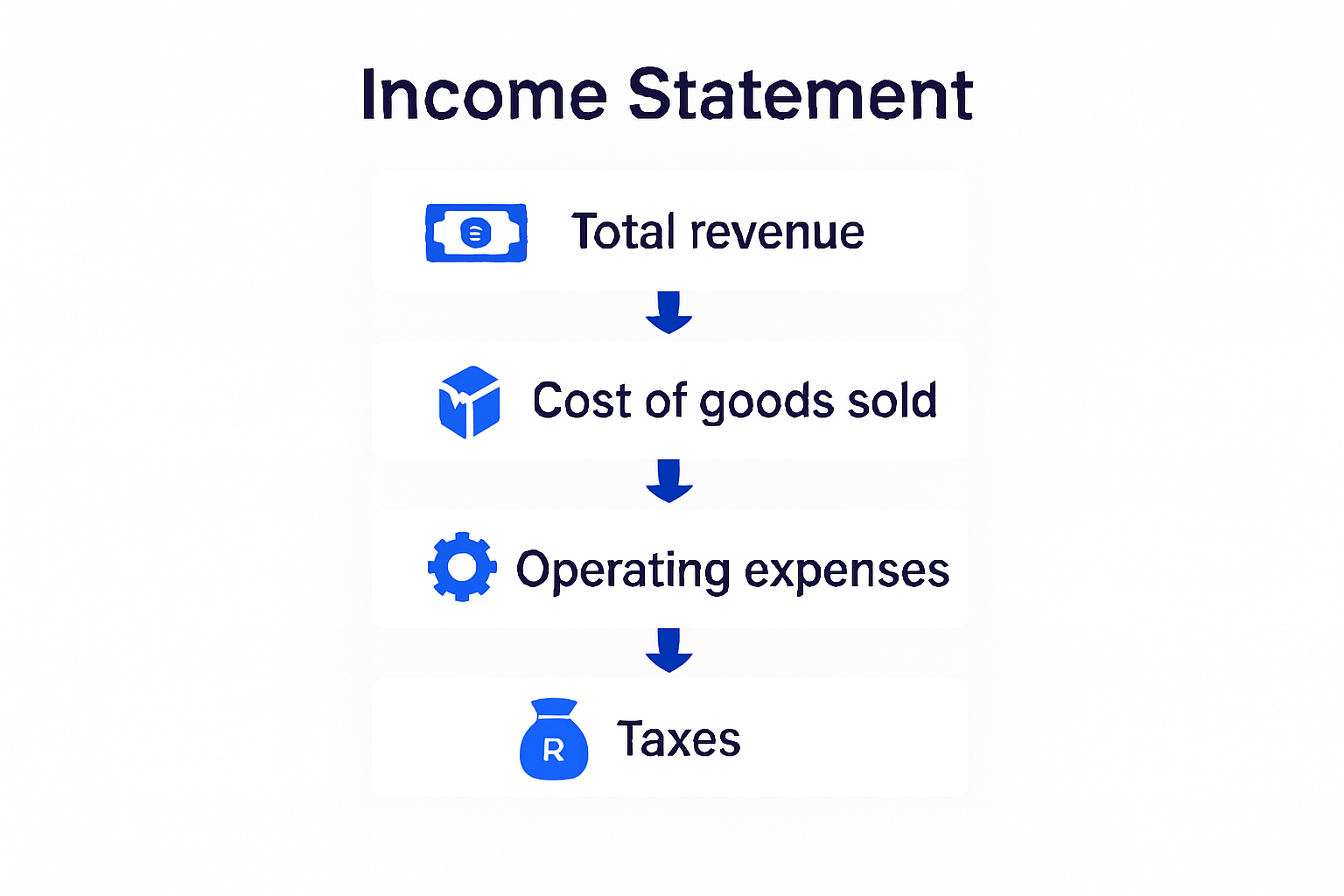
The statement typically begins with total revenue, which includes all income generated from primary business activities. This might encompass product sales, service fees, or other income streams specific to your business model. By detailing these revenues, businesses can understand their earning potential and identify the most lucrative aspects of their operations.
Breaking Down Expenses and Profitability
Beyond revenue, income statements meticulously categorize different types of expenses. These usually include:
- Cost of Goods Sold (COGS): Direct expenses related to producing goods or services
- Operating Expenses: Costs required to run daily business operations
- Administrative Expenses: Management and administrative costs
- Tax Expenses: Mandatory financial obligations to SARS
Research from SAICA highlights that understanding these expense categories helps businesses identify potential areas for cost optimization. By comparing expenses against revenue, entrepreneurs can pinpoint inefficiencies and develop strategies to improve financial performance.
The bottom line of an income statement reveals net profit or loss, which represents the ultimate financial outcome after subtracting all expenses from total revenue. This figure is crucial for assessing business sustainability, planning future investments, and demonstrating financial health to potential investors or financial institutions.
For south-african businesses navigating complex economic landscapes, a well-prepared income statement becomes more than just a financial document. It transforms into a strategic roadmap, guiding decision-making and highlighting opportunities for growth and improvement. By regularly analyzing these statements, business owners can make informed choices about resource allocation, potential expansions, and financial strategy.
Here is a summary table outlining the main income statement components and their descriptions to help you quickly identify what each element represents on a standard South African income statement.
| Component | Description |
|---|---|
| Total Revenue | Income from product sales, services, or other business activities |
| Cost of Goods Sold (COGS) | Direct costs of producing goods or delivering services |
| Gross Profit | Revenue minus COGS; shows core operational efficiency |
| Operating Expenses | Costs related to daily business functions (salaries, rent, etc.) |
| Administrative Expenses | Management and office-related costs |
| Tax Expenses | Amount payable to SARS as part of tax obligations |
| Net Profit (or Loss) | Remaining income after all expenses and taxes are deducted |
How to Read an Income Statement Easily
Reading an income statement can seem intimidating, but with the right approach, south-african business owners can quickly master this essential financial document. Understanding its structure and key components empowers entrepreneurs to make informed financial decisions and gain clear insights into their business performance.
Top-Down Approach to Income Statement Analysis
According to the SEC’s financial statement guide, reading an income statement effectively requires a systematic top-down approach. Start by examining the top section, which always begins with total revenue. This figure represents all income generated during the specific accounting period.
Next, look at the Cost of Goods Sold (COGS), which represents direct expenses associated with producing goods or services. Subtracting COGS from total revenue gives you the gross profit – a critical indicator of your business’s core operational efficiency. A healthy gross profit margin suggests your business can effectively manage production costs.
Understanding Key Financial Metrics
Harvard Business School Online recommends focusing on several important metrics when reading an income statement. Operating expenses come next, including administrative costs, marketing expenses, and salaries. These are subtracted from gross profit to calculate operating income, which reveals how much profit your business generates from its primary activities.
Pay special attention to the following key metrics:
- Gross Profit Margin: Indicates production efficiency
- Operating Income: Shows profitability from core business operations
- Net Income: The ultimate bottom-line figure after all expenses
The final line – net income – provides the most comprehensive view of your financial performance. This figure represents total earnings after accounting for all expenses, taxes, and other financial obligations. A positive net income indicates profitability, while a negative figure signals potential financial challenges.
For deeper insights into financial reporting, check out our comprehensive guide on understanding financial statements.
Mastering income statement interpretation requires practice and patience. Regular review helps south-african business owners identify trends, spot potential issues early, and make data-driven strategic decisions. Remember that each line item tells a story about your business’s financial health, from revenue generation to expense management.
Below is a table outlining the basic steps to follow when reading an income statement, making the process more approachable for South African business owners.
| Step | What to Look At | Purpose |
|---|---|---|
| 1 | Total Revenue | See total sales and incoming funds |
| 2 | Cost of Goods Sold (COGS) | Find direct costs linked to sales |
| 3 | Gross Profit | Calculate efficiency after direct costs |
| 4 | Operating & Administrative Expenses | Identify regular business operational costs |
| 5 | Operating Income | Assess profit from core operations |
| 6 | Tax Expenses | Check if taxes payable are properly listed |
| 7 | Net Income (Profit/Loss) | Determine overall business profitability |
Key Income Statement Terms for South African Businesses
Navigating income statements requires a solid understanding of specific financial terminology. For south-african businesses, mastering these key terms becomes crucial for accurate financial reporting and strategic decision-making.
Essential Revenue and Income Terminology
According to SARS, understanding income definitions is fundamental to proper financial reporting. Gross Income represents the total revenue generated before any deductions. This includes all income streams such as sales, service fees, and other business-related earnings.
Net Income, often called the bottom line, reflects the total earnings after subtracting all expenses, taxes, and operational costs. For south-african businesses, this figure provides a clear picture of actual profitability and financial performance.
Expense and Profitability Definitions
PwC’s tax summaries highlight critical expense-related terms. Cost of Goods Sold (COGS) represents direct expenses associated with producing goods or services. This includes raw materials, direct labor, and manufacturing overhead directly tied to production.
Operating Expenses encompass all costs required to run daily business operations. These typically include:
- Rent and utility payments
- Salaries and wages
- Marketing and administrative costs
- Insurance and professional fees
Operating Income emerges as a critical metric, calculated by subtracting operating expenses from gross profit. This figure demonstrates a business’s ability to generate profit from core operations before accounting for interest and taxes.
Tax and Compliance Terminology
The South African Tax Guide provides essential insights into tax-related terms. Taxable Income represents the total income subject to corporate tax after allowable deductions. Understanding this term helps businesses accurately calculate their tax obligations to SARS.
Earnings Before Interest, Taxes, Depreciation, and Amortization (EBITDA) offers a comprehensive view of a company’s operational performance. This metric allows businesses to compare financial performance by eliminating the effects of financial and accounting decisions.
Learn more about comprehensive financial reporting for your business.
Mastering these income statement terms empowers south-african business owners to interpret financial documents with confidence. Each term provides a unique lens through which to understand your business’s financial health, enabling more informed strategic planning and decision-making. Regular practice and continuous learning will help entrepreneurs become more financially literate and strategically positioned in the competitive business landscape.
Using Income Statements for Tax and Cloud Accounting
In the evolving landscape of south-african business finance, income statements have become pivotal tools for tax compliance and modern cloud accounting practices. Understanding how to leverage these financial documents can significantly streamline your business’s financial management and regulatory reporting.
Tax Compliance and Income Statement Reporting
According to SARS, income statements play a critical role in determining corporate tax obligations. They provide a comprehensive breakdown of your business’s financial performance, which directly impacts your taxable income calculation. Every line item becomes crucial when preparing your annual tax return.
The income statement helps businesses accurately report:
- Total revenue streams
- Allowable business expenses
- Profit before tax
- Net taxable income
By maintaining meticulous income statements, south-african businesses can ensure precise tax reporting, minimize the risk of penalties, and potentially optimize tax strategies.
Cloud Accounting and Digital Financial Management
Research from the Journal of Economic and Financial Sciences highlights the transformative impact of cloud accounting on financial reporting. Modern cloud accounting platforms can now automatically generate and analyze income statements, providing real-time insights into business financial performance.
Key advantages of cloud-based income statement management include:
- Instant Financial Visibility: Real-time access to financial data
- Automated Calculations: Reduced manual data entry errors
- Secure Data Storage: Encrypted financial records
- Easy Collaboration: Seamless sharing with accountants and tax professionals
Explore our comprehensive guide to financial statement management.
Strategic Financial Planning
Income statements in cloud accounting environments go beyond simple tax compliance. They become powerful strategic tools for business decision-making. By integrating income statement data with other financial metrics, businesses can:
- Forecast future revenue
- Identify potential cost-cutting opportunities
- Track business performance trends
- Make data-driven strategic decisions
For south-african entrepreneurs, this means transforming income statements from mere compliance documents into dynamic business intelligence tools. The combination of accurate tax reporting and advanced cloud accounting technologies empowers businesses to navigate complex financial landscapes with confidence and precision.
As technology continues to evolve, mastering the integration of income statements with cloud accounting platforms will become increasingly crucial for sustainable business growth and financial management.
Frequently Asked Questions
What is an income statement?
An income statement is a financial document that provides a summary of a business’s revenues, expenses, and profits or losses over a specific accounting period. It helps South African businesses analyze their financial performance and operational efficiency.
Why are income statements important for South African businesses?
Income statements are crucial for South African businesses as they reveal how revenue converts into net profit or loss. They assist in identifying growth opportunities, monitoring financial health, and improving decision-making, ultimately increasing the chances of long-term success.
How can I read my business’s income statement effectively?
To read your income statement effectively, use a top-down approach: start from total revenue, then subtract the Cost of Goods Sold (COGS) to find gross profit. Analyze operating expenses and calculate operating income, and finally, assess net income to understand overall profitability.
What key terms should I know related to income statements?
Key terms include: Gross Income (total revenue before deductions), Net Income (earnings after all expenses), Cost of Goods Sold (direct production costs), and Operating Expenses (daily business operation costs). Understanding these terms is essential for accurate financial reporting.
Transform Your Income Statements Into Strategic Advantage
Tired of feeling lost or anxious when reviewing your income statement? Many South African business owners face the same challenge. Complex numbers and unfamiliar terms like Gross Profit, Operating Income, and Net Income can make it tough to see where your money goes or how to plan ahead. Inefficient expense tracking and inconsistent financial reporting often put growth and tax compliance at risk, leaving you overwhelmed at year-end.
Ready Accounting specialises in turning confusion into clarity. Our tailored cloud accounting solutions automatically capture and organise every financial detail, giving you crystal-clear income statements in real time. Want expert help to make sense of your business numbers or ensure stress-free SARS compliance? Visit Ready Accounting to discover how our all-in-one services can save you time and help your business grow. Take control of your financial future now by booking a consultation with our friendly team. Let us simplify your financial management – so you can focus on what matters most.
Recommended
- Annual Financial Statements in South Africa: What Business Owners Need to Know for 2025 – Ready Accounting
- What Is Financial Reporting? Guide for South African Businesses 2025 – Ready Accounting
- How to Read Financial Statements: Easy Guide for 2025 – Ready Accounting
- Financial Statement Basics: A Guide for Business Owners – Ready Accounting