
Forensic Analysis of Different Types of Business Taxes
Every South African business has to pay its fair share of taxes, from income on profits to those pesky PAYE deductions. But get this. Small businesses that fail to comply with tax rules have a failure rate of up to 90 percent. Most people think taxes are just a headache, but the real power lies in understanding them properly. Tax may seem like an expense, but it can shape your business’s future in unexpected ways.
Table of Contents
- What Are Business Taxes And Why Do They Matter?
- Key Types Of Business Taxes Explained
- How Business Taxes Impact Financial Planning
- Understanding Tax Obligations For South African Businesses
- The Role Of Tax Compliance In Business Success
Quick Summary
| Takeaway | Explanation |
|---|---|
| Understand your tax obligations | Businesses must be aware of various tax types such as income and payroll taxes to remain compliant. |
| Prioritize effective tax management | Proper tax planning minimizes penalties and enhances financial health and cash flow. |
| Engage professional accounting services | Professional guidance helps businesses navigate complex tax regulations and optimize tax strategies. |
| Maintain accurate records | Consistent record-keeping is vital for compliance and aids in accurate financial forecasting. |
| Focus on tax compliance strategies | Robust compliance practices build trust with authorities and stakeholders, ensuring long-term sustainability. |
What Are Business Taxes and Why Do They Matter?
Business taxes represent financial contributions that companies must pay to the government based on their income, transactions, and operational activities. Understanding these different types of business taxes is crucial for maintaining legal compliance and ensuring your business remains financially healthy.
The Fundamental Purpose of Business Taxes
Taxes are not just financial obligations but essential contributions that fund public infrastructure, social services, and national development. When businesses pay taxes, they directly support national economic growth, community development, and public welfare systems. Learn more about tax compliance strategies to understand how proper tax management can protect your business.
According to research from the IRS, businesses are subject to multiple tax categories that vary depending on their structure, income, and operational characteristics. These tax obligations can include:
- Income Taxes: Levied on the profits generated by the business
- Payroll Taxes: Contributions based on employee wages and compensation
- Capital Gains Taxes: Taxes on profits from selling business assets
Financial Implications and Compliance
Proper tax management goes beyond mere legal requirement. It represents a strategic financial practice that can significantly impact a company’s bottom line. Businesses that understand and effectively manage their tax obligations can:
- Minimize potential penalties and legal risks
- Optimize financial planning and cash flow
- Maintain a positive reputation with regulatory authorities
For South African businesses, navigating tax regulations requires careful attention to SARS guidelines, accurate record-keeping, and a proactive approach to financial reporting. Engaging professional accounting services can help businesses stay compliant and make informed financial decisions.
Key Types of Business Taxes Explained
Navigating the complex world of business taxation requires a comprehensive understanding of the various tax categories that apply to different business structures and activities. In South Africa, businesses must be aware of multiple tax types to ensure compliance and maintain financial health.
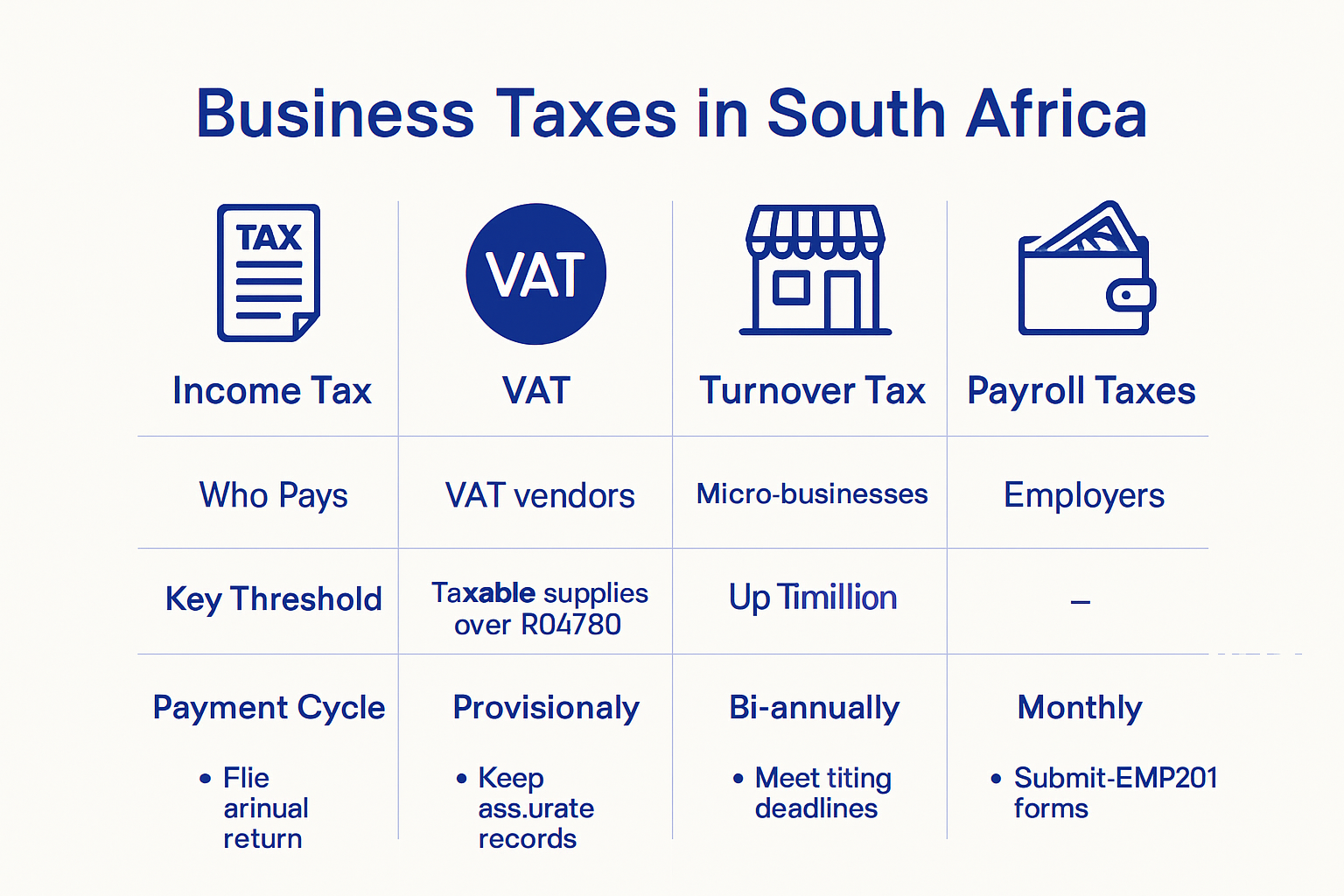
To help readers clearly distinguish between the main kinds of business taxes in South Africa, the table below organises the tax types, who must pay them, and key details for each.
| Tax Type | Who Pays It | Description |
|---|---|---|
| Income Tax | All registered businesses | Tax on company profits (corporate or individual rates) |
| PAYE (Pay As You Earn) | Employers with employees | Tax deducted from employee salaries |
| UIF (Unemployment Insurance Fund) | Employers with employees | Mandatory contributions for unemployment benefits |
| SDL (Skills Development Levy) | Employers meeting certain thresholds | Levy for employee training and development |
| Capital Gains Tax | Businesses disposing of assets | Tax on profit from the sale of business assets |
| VAT (Value-Added Tax) | Businesses with turnover above R1 million | Indirect tax on sales of goods/services if registered |
| Turnover Tax | Eligible small businesses (under R1 million turnover) | Simplified alternative to income tax and VAT |
Income Tax: The Primary Business Tax Obligation
Income tax represents the most fundamental tax liability for businesses, calculated based on the company’s net profits. Registered companies are required to pay corporate income tax on their annual earnings, with rates varying depending on the business structure and total taxable income. Explore our comprehensive tax planning strategies to optimize your tax management approach.
According to research from the U.S. Small Business Administration, businesses typically encounter several key tax categories:
- Corporate Income Tax: Applied to company profits
- Provisional Tax: Advance payments made during the financial year
- Supplementary Tax: Additional tax calculations for specific business scenarios
Payroll and Employment-Related Taxes
Employment taxes represent another critical component of business tax obligations. These taxes include contributions to social security, unemployment insurance, and other mandatory employee-related payments. For South African businesses, this encompasses:
- PAYE (Pay As You Earn): Mandatory tax deductions from employee salaries
- UIF Contributions: Unemployment Insurance Fund payments
- SDL (Skills Development Levy): Mandatory training and development contributions
Businesses must carefully manage these tax obligations to remain compliant with SARS regulations and avoid potential penalties. Accurate record-keeping and timely submissions are crucial for maintaining good standing with tax authorities.
How Business Taxes Impact Financial Planning
Business taxes are not merely financial obligations but strategic elements that profoundly influence a company’s overall financial planning and operational decision-making. Understanding their intricate relationship with financial strategy is crucial for sustainable business growth and fiscal management.
Strategic Tax Considerations in Financial Forecasting
Financial planning requires businesses to anticipate and integrate tax implications into their long-term strategic models. Effective tax management can significantly impact a company’s cash flow, profitability, and investment potential. Discover advanced tax planning techniques that can help optimize your financial performance.
According to research from the Frank Hawkins Kenan Institute, tax complexity and uncertainty can substantially influence business investment strategies. Key strategic tax considerations include:
- Projected Tax Liabilities: Estimating annual tax expenses
- Potential Tax Deductions: Identifying opportunities for tax optimization
- Cash Flow Management: Aligning tax payments with revenue cycles
Budgeting and Resource Allocation
Tax planning directly impacts how businesses allocate financial resources and make critical investment decisions. South African businesses must develop comprehensive strategies that balance tax compliance with financial growth. This involves:
- Proactive Tax Planning: Anticipating and mitigating potential tax burdens
- Investment Timing: Considering tax implications of capital expenditures
- Financial Risk Management: Developing strategies to minimize unexpected tax expenses
Successful financial planning requires a holistic approach that integrates tax considerations into every aspect of business strategy. By understanding and strategically managing tax obligations, businesses can create more resilient and adaptable financial frameworks.
Understanding Tax Obligations for South African Businesses
Navigating the complex landscape of tax obligations is crucial for businesses operating in South Africa. Each business structure carries unique tax responsibilities that require careful understanding and strategic management to ensure compliance and avoid potential penalties.
Business Registration and Tax Identification
Proper tax registration is the foundation of legal business operations in South Africa. Businesses must register with both the Companies and Intellectual Property Commission (CIPC) and the South African Revenue Service (SARS) to establish their legal tax identity. Learn how to prevent common tax compliance mistakes that can jeopardize your business’s financial health.
According to SARS guidelines, businesses must be aware of several critical tax registration requirements:
- Tax Identification Number: Unique identifier for tax purposes
- Business Entity Registration: Specific requirements for different business structures
- Income Tax Registration: Mandatory for all operational businesses
VAT and Turnover Tax Considerations
Small and medium-sized businesses in South Africa face specific tax obligations that can significantly impact their financial strategy. Turnover tax provides a simplified tax system for micro businesses, offering a more manageable approach to tax compliance. Key considerations include:
- VAT Registration Threshold: Mandatory for businesses with annual turnover exceeding R1 million
- Voluntary VAT Registration: Possible for businesses with annual income over R50,000
- Turnover Tax: Simplified tax system for businesses with annual turnover under R1 million
Successful tax management requires proactive planning, accurate record-keeping, and a thorough understanding of the evolving tax landscape. Businesses should regularly consult with tax professionals to ensure they meet all statutory requirements and optimize their tax strategy.

The Role of Tax Compliance in Business Success
Tax compliance represents far more than a legal requirement. It is a critical strategic element that can profoundly influence a business’s financial health, reputation, and long-term sustainability. Understanding and implementing robust tax compliance practices is fundamental to achieving sustainable business success in South Africa.
Strategic Importance of Tax Compliance
Effective tax compliance goes beyond mere legal obligation – it is a strategic business imperative. Businesses that prioritize transparent and accurate tax reporting create a foundation of trust with regulatory authorities and stakeholders. Discover strategies to prevent costly tax compliance mistakes that can potentially derail your business growth.
According to research from the Penn Wharton Budget Model, businesses that maintain rigorous tax compliance practices benefit from:
- Enhanced Business Credibility: Building trust with financial institutions
- Reduced Legal Risks: Minimizing potential penalties and legal complications
- Improved Financial Planning: Creating more accurate financial forecasting
Consequences of Non-Compliance
Non-compliance with tax regulations can have severe and far-reaching consequences for businesses. Tax violations can result in significant financial penalties, legal challenges, and damage to business reputation. The potential risks include:
- Financial Penalties: Substantial fines and interest charges
- Legal Proceedings: Potential criminal investigations
- Reputational Damage: Loss of stakeholder and customer confidence
Successful businesses recognize that tax compliance is not a burdensome administrative task but a strategic opportunity to demonstrate financial integrity, build stakeholder trust, and create a solid foundation for sustainable growth.
The following table summarises key risks and benefits of tax compliance, helping business owners to quickly see why proper compliance is so important.
| Aspect | Tax Compliance (Benefits) | Tax Non-Compliance (Risks) |
|---|---|---|
| Legal Status | Maintains legal operation | Legal penalties, risk of prosecution |
| Financial Health | Accurate forecasts & improved cash flow | Fines, unexpected expenses |
| Reputation | Builds stakeholder and public trust | Damaged business credibility |
| Business Growth | Supports access to finance and expansion | Loss of funding, limited opportunities |
| Operational Risk | Reduced risk through proactive planning | Increased risk of audits and investigations |
Turn Business Tax Complexity into Financial Confidence
Are you feeling overwhelmed by the different types of business taxes and anxious about missing deadlines or facing penalties? You are not alone. Navigating income tax, payroll responsibilities, and VAT registration as discussed in the article is a real challenge for many South African business owners. Many small and medium-sized enterprises struggle to balance daily operations with the demands of proper tax compliance. At Ready Accounting, we turn this challenge into an opportunity for your business to thrive.

Let us help you secure peace of mind with expert tax consulting and fully managed accounting services. Our team specialises in simplifying your financial processes by using the latest cloud technology and tailored support. Ready to take control of your business taxes and stay compliant today? Visit Ready Accounting to book a personalised consultation and explore how our trusted solutions can keep your finances on track.
Frequently Asked Questions
What are the main types of business taxes in South Africa?
The main types of business taxes in South Africa include income tax, payroll taxes (such as PAYE and UIF contributions), capital gains tax, and value-added tax (VAT) for businesses exceeding specific turnover thresholds.
How does income tax affect my business?
Income tax is levied on the profits generated by your business. Understanding and managing this tax obligation can help optimize your financial planning and minimize legal risks.
What are payroll taxes, and why are they important?
Payroll taxes are mandatory contributions based on employee wages, including PAYE and UIF. They are essential for complying with labor laws and ensuring proper employee benefits.
How can businesses ensure tax compliance in South Africa?
Businesses can ensure tax compliance by accurately registering with the South African Revenue Service (SARS), maintaining thorough records, and staying informed about tax regulations and deadlines.
Recommended
- Top Tax Questions Small Business Owners Ask in 2025 – Ready Accounting
- Why 90% of South African Small Businesses Fail Due to Poor Tax Compliance (And How to Avoid It) – Ready Accounting
- Year-End Tax Planning Guide for Small Businesses – Ready Accounting
- Types of Accounting Services for SMEs in 2025: Your Guide – Ready Accounting