

Forensic Analysis of Digital Transformation in Accounting
South African accounting is shifting fast as businesses move from piles of paperwork to smart digital tools that do the heavy lifting. The surprising bit is this shift is not just about making admin tasks easier. Companies have reported up to 40 percent fewer accounting errors after moving to automated systems. But while most folks expect the big win to be saving time, the real advantage comes from having real-time financial insights at your fingertips and making decisions that keep you ahead of the pack.
Table of Contents
- What Is Digital Transformation In Accounting?
- Why Digital Transformation Matters For Businesses
- How Digital Transformation Works In Accounting Functions
- Key Concepts Behind Cloud-Based Accounting Solutions
- Real-World Applications And Benefits Of Digital Transformation
Quick Summary
| Takeaway | Explanation |
|---|---|
| Embrace cloud accounting solutions | Transitioning to cloud-based platforms enhances accessibility and collaboration among teams. |
| Utilize automated financial processes | Automating data capture and reconciliation minimizes manual errors and boosts efficiency in accounting tasks. |
| Leverage real-time financial insights | Accessing immediate data enables faster, informed decisions and drives better strategic choices. |
| Enhance compliance with technology | Integrated compliance monitoring systems ensure accurate and timely adherence to regulatory requirements. |
| Adopt predictive analytics for decision-making | Using advanced analytics tools helps forecast financial trends and assess potential risks effectively. |
What is Digital Transformation in Accounting?
Digital transformation in accounting represents a fundamental reimagining of financial processes through advanced technological integration. At its core, this approach moves beyond traditional manual bookkeeping and spreadsheet management to leverage cutting-edge digital tools that streamline financial operations, enhance accuracy, and provide real-time insights for South African businesses.
Understanding the Technological Shift
The digital transformation journey in accounting is about more than just adopting new software. Explore how South African SMEs are modernizing their financial management through strategic technological implementation. This transformation encompasses several critical technological interventions:
- Cloud-based accounting platforms that enable remote access and real-time collaboration
- Automated data capture and reconciliation systems
- Advanced analytics and predictive financial modeling tools
- Integrated compliance and reporting mechanisms
Key Benefits for South African Businesses
According to research from the University of the Witwatersrand, digital transformation offers significant advantages for financial management. These include:
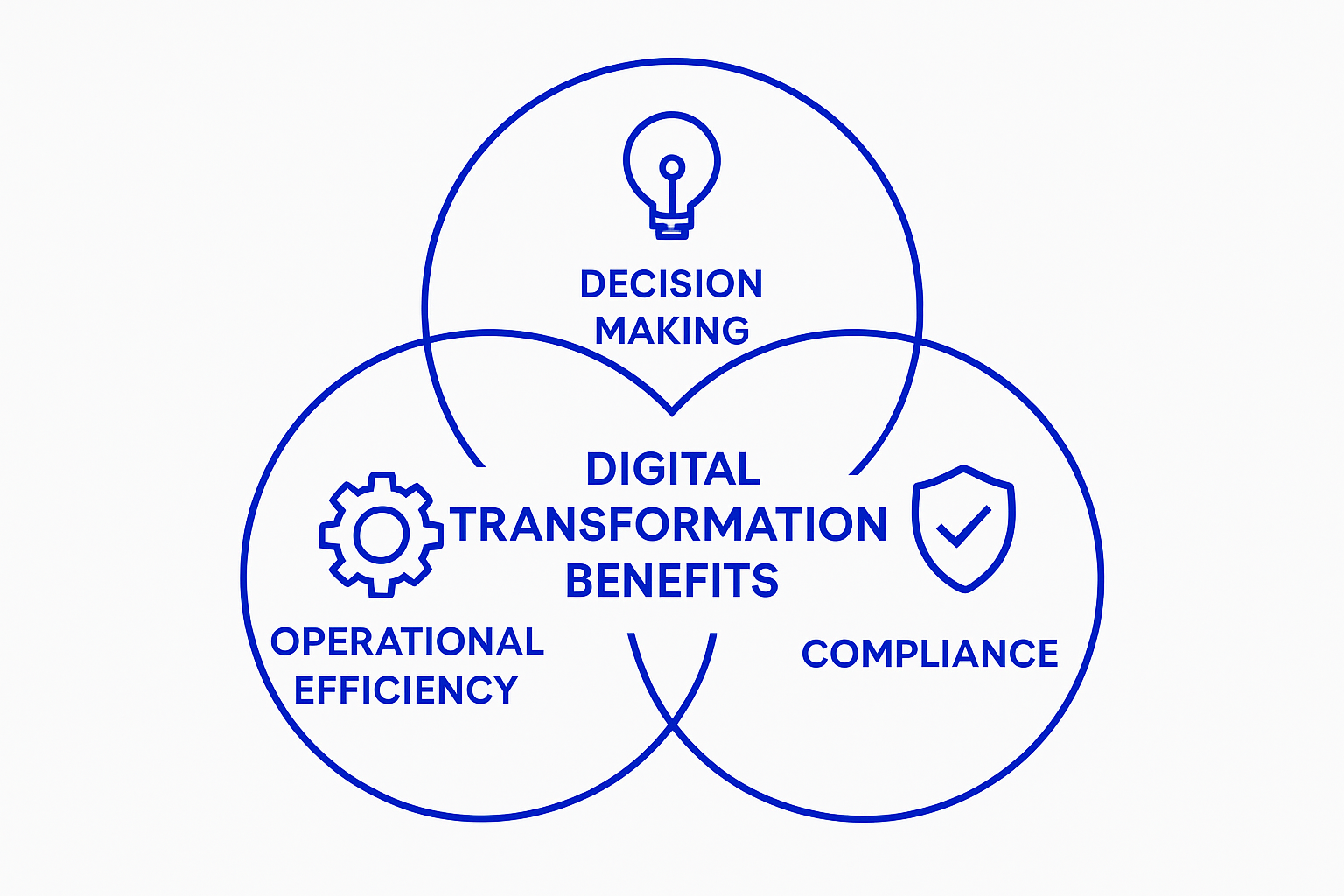
- Improved Operational Efficiency: Reducing manual data entry and minimizing human error
- Enhanced Decision Making: Providing instant financial insights and predictive analytics
- Cost Reduction: Streamlining processes and reducing administrative overhead
- Robust Compliance: Ensuring accurate SARS reporting and regulatory adherence
For South African businesses, digital transformation is not just a technological upgrade but a strategic approach to financial management that enables more agile, data-driven decision-making in an increasingly complex economic landscape.
Why Digital Transformation Matters for Businesses
In the rapidly evolving South African business landscape, digital transformation has become more than a technological trend. It represents a critical strategic imperative for organizations seeking to remain competitive, resilient, and adaptable in an increasingly complex economic environment. Understand the essential role of accountants in supporting business growth as they navigate these technological changes.
Competitive Advantage in a Digital Economy
According to research from KwaZulu-Natal universities, digital transformation drives current market dynamics, compelling businesses to fundamentally rethink their operational strategies. Companies that embrace digital technologies can:
- Rapidly respond to market changes
- Create more personalized customer experiences
- Develop innovative service delivery models
- Unlock new revenue streams
Financial Performance and Operational Efficiency
The impact of digital transformation extends far beyond mere technological adoption. By integrating advanced digital tools, businesses can achieve significant improvements in financial performance and operational efficiency. Key benefits include:
- Enhanced Data Accuracy: Reducing human error through automated processes
- Real-time Financial Insights: Enabling faster, more informed decision-making
- Cost Optimization: Streamlining administrative tasks and reducing operational overheads
- Scalable Infrastructure: Creating flexible business models that can quickly adapt to market demands
For South African enterprises, digital transformation is not optional but essential. It represents a strategic approach to surviving and thriving in an increasingly digital, interconnected global marketplace.
How Digital Transformation Works in Accounting Functions
Digital transformation in accounting functions represents a comprehensive technological integration that fundamentally restructures financial processes through intelligent systems and advanced software solutions. Learn more about the top accounting tasks to automate in 2025 and understand how technology is reshaping financial management.
Technological Architecture of Digital Accounting
The technological framework of digital transformation involves interconnected systems that seamlessly capture, process, analyze, and report financial data. According to research from the University of the Witwatersrand, this approach encompasses several critical technological components:
- Cloud-based accounting platforms
- Artificial intelligence and machine learning algorithms
- Automated data integration systems
- Advanced analytics and reporting tools
- Secure digital documentation management
Key Operational Mechanisms
Digital transformation fundamentally changes how accounting functions operate by introducing intelligent automation and real-time processing capabilities. The operational mechanisms include:
- Automated Data Capture: Eliminating manual data entry through intelligent scanning and optical character recognition
- Continuous Reconciliation: Instant matching and verification of financial transactions
- Predictive Financial Modeling: Using AI to forecast financial trends and potential risks
- Integrated Compliance Monitoring: Automatic tracking of regulatory requirements and potential discrepancies
For South African businesses, these technological interventions mean more than efficiency gains. They represent a strategic approach to financial management that enables proactive decision-making, reduces human error, and provides deeper insights into organizational financial health.
The table below breaks down the key technological components and operational mechanisms of digital accounting transformation, helping clarify the modern features that distinguish digital from traditional approaches.
| Component or Mechanism | Description |
|---|---|
| Cloud-based accounting platforms | Enable remote access, real-time collaboration, and flexible infrastructure for accounting tasks |
| Automated data capture | Reduce manual entry by using intelligent scanning (OCR) and system integration |
| AI and predictive financial modelling | Utilise artificial intelligence to forecast trends and assess financial risks |
| Continuous reconciliation | Allow instant matching and verification of financial transactions in real time |
| Integrated compliance monitoring | Track regulatory requirements and detect discrepancies automatically |
| Advanced analytics and reporting | Provide data-driven insights, enabling faster and more accurate business decisions |
| Secure documentation management | Digitally store and protect sensitive financial documents with robust security protocols |
Key Concepts Behind Cloud-Based Accounting Solutions
Cloud-based accounting solutions represent a paradigm shift in financial management, enabling businesses to move beyond traditional desktop software and embrace more flexible, scalable technological infrastructure. Discover the seven key benefits of cloud accounting for small business growth and understand how these platforms can transform your financial operations.
Fundamental Architectural Components
According to research from the Gauteng Department of e-Government, cloud-based solutions are built on sophisticated digital infrastructure that provides shared, secure, and adaptable technological environments. The core architectural components include:
- Distributed computing networks
- Secure data storage systems
- Real-time synchronization mechanisms
- Scalable processing capabilities
- Advanced encryption protocols
Key Operational Principles
Cloud-based accounting solutions operate on several fundamental principles that distinguish them from traditional accounting systems:
- Accessibility: Enabling financial data access from anywhere with internet connectivity
- Scalability: Allowing businesses to adjust computational resources based on changing requirements
- Collaboration: Facilitating simultaneous multi-user interactions and data sharing
- Automatic Updates: Ensuring systems remain current with latest regulatory and technological standards
For South African businesses, these cloud-based solutions offer more than technological convenience. They represent a strategic approach to financial management that promotes agility, reduces infrastructure costs, and provides robust, secure platforms for comprehensive financial reporting and analysis.

Real-World Applications and Benefits of Digital Transformation
Digital transformation transcends technological implementation, representing a holistic reimagining of business processes and strategic capabilities. Explore how digital transformation supports essential accounting services and understand its profound impact on organizational performance.
Practical Implementation Scenarios
According to research from the University of the Witwatersrand, digital transformation manifests through multiple practical applications across various business functions:
- Automated financial reporting and compliance monitoring
- Real-time performance dashboards
- Predictive financial risk assessment
- Intelligent resource allocation systems
- Integrated customer relationship management platforms
Tangible Business Outcomes
Digital transformation delivers measurable benefits that extend beyond technological upgrades, fundamentally restructuring organizational capabilities:
- Enhanced Decision Making: Providing data-driven insights that enable faster, more accurate strategic choices
- Operational Efficiency: Reducing manual processes and minimizing administrative overhead
- Cost Optimization: Streamlining workflows and eliminating redundant technological infrastructure
- Competitive Differentiation: Creating agile business models responsive to market dynamics
For South African businesses, digital transformation represents more than a technological trend. It is a strategic imperative that enables organizations to navigate complex economic landscapes, respond quickly to market changes, and create sustainable competitive advantages through intelligent, interconnected technological ecosystems.
To help illustrate the practical impact of digital transformation, the following table compares the main tangible business outcomes achieved through the implementation of digital accounting systems in South Africa.
| Outcome | Description |
|---|---|
| Enhanced Decision Making | Access to real-time, data-driven insights for quicker and more accurate strategic choices |
| Operational Efficiency | Reduction in manual processes and lowering of administrative overhead |
| Cost Optimisation | Streamlining workflows and eliminating unnecessary technological infrastructure |
| Competitive Differentiation | Creating agile, responsive business models that can react to market changes swiftly |
| Robust Compliance | Improved accuracy and timeliness in meeting regulatory and SARS reporting obligations |
Take Ownership of Your Business Future with Digital Accounting Expertise
Navigating digital transformation in accounting can feel overwhelming for South African businesses. If manual processes, outdated spreadsheets, or compliance uncertainty are holding your business back, you are not alone. The article highlights how moving from manual to advanced digital tools can streamline your operations, reduce errors, and offer real-time insights. Now is the time to bridge that gap and empower your company with the right technology, experience, and client-focused support.
Ready Accounting is here to help you unlock the benefits of cloud-based accounting and automation. With our expertise in cloud accounting, tailored consulting, and local market understanding, we are ready to support your digital transition so you can focus on smarter growth. Discover how our professional team can deliver proven financial management solutions personalised for your business. Book your free consultation today at Ready Accounting and take the first confident step toward a digital, competitive future.
Frequently Asked Questions
What is digital transformation in accounting?
Digital transformation in accounting involves integrating advanced technologies to improve and streamline financial processes, moving beyond traditional methods like manual bookkeeping.
How does digital transformation benefit South African businesses?
Digital transformation enhances operational efficiency, improves decision-making through real-time insights, reduces costs, and ensures robust compliance with regulations like SARS reporting.
What technologies are involved in digital transformation for accounting?
Key technologies include cloud-based accounting platforms, automated data capture systems, advanced analytics tools, and integrated compliance monitoring systems.
How can small businesses in South Africa implement digital transformation in accounting?
Small businesses can start by adopting cloud-based accounting solutions, automating routine tasks, and utilizing analytics tools to gain insights and improve their financial management processes.