

Forensic Analysis of the Importance of Business Budgeting
Business budgeting sounds like a mountain of spreadsheets and endless calculations but it is so much more than ticking boxes for compliance. Research from the Education and Training Unit shows that a well-constructed budget actually becomes a living financial roadmap for South African companies, guiding everything from cash flow to growth strategy. Here is the twist. The real power of budgeting is not in controlling spending, but in unlocking new opportunities for smart expansion and long-term sustainability.
Table of Contents
- Defining Business Budgeting: What It Is
- The Significance of Business Budgeting for Growth
- Navigating Financial Decisions: How Budgeting Works
- Key Concepts in Business Budgeting You Should Know
Quick Summary
| Takeaway | Explanation |
|---|---|
| Business budgeting is a strategic tool. | It guides organisations in aligning financial resources with their strategic objectives, enhancing overall performance and planning. |
| Effective budgeting minimizes financial uncertainty. | By enabling predictive modeling, businesses can better anticipate cash flow fluctuations and manage financial risks. |
| Regular budget reviews ensure adaptability. | Continuous tracking and adjusting of budgets help businesses respond effectively to changing economic conditions and performance metrics. |
| Utilize diverse budgeting methods. | Different budgeting approaches, like zero-based or performance-based, can optimize resource allocation and meet specific organisational needs. |
| Budgeting supports sustainable growth. | A well-constructed budget translates financial potential into actionable growth opportunities that ensure long-term stability. |
Defining Business Budgeting: What It Is
Business budgeting represents a fundamental financial planning tool that enables organisations to map out their financial trajectory and make strategic decisions. At its core, a budget is a comprehensive financial roadmap that outlines expected income, projected expenses, and financial goals for a specific period.
The Essence of Business Budgeting
According to the Education and Training Unit, a budget serves as a detailed table showing an organisation’s anticipated income and expenditure for a fixed timeframe, typically one financial year. This strategic document goes beyond simple number tracking – it becomes a critical management instrument that helps businesses understand their financial health and potential.
Key characteristics of an effective business budget include:
- Providing clear financial visibility
- Enabling precise resource allocation
- Supporting strategic planning and decision making
- Identifying potential financial challenges in advance
Financial Planning and Goal Setting
Business budgeting transforms abstract financial goals into concrete, measurable targets. By creating a comprehensive financial planning guide, businesses can systematically break down their long-term objectives into manageable financial milestones.
A well-constructed budget acts like a financial compass, guiding businesses through economic uncertainties. It helps entrepreneurs anticipate cash flow challenges, plan for potential investment opportunities, and maintain fiscal discipline.
The following table organises the key components and characteristics of an effective business budget as discussed in the article, providing a quick reference for South African organisations building or reviewing their financial plans.
| Component | Description |
|---|---|
| Revenue Projections | Estimating all potential income sources |
| Fixed Expenses | Costs that remain constant each month |
| Variable Expenses | Costs that fluctuate based on activity or volume |
| Capital Investment | Funds allocated for assets and long-term investments |
| Cash Flow Management | Monitoring inflows and outflows for liquidity |
| Risk Mitigation Strategies | Financial buffers for unexpected challenges |
| Regular Reviews | Ongoing tracking and necessary adjustments |
The primary purpose of budgeting extends beyond mere number crunching. It represents a strategic tool that allows business owners to:
- Align financial resources with strategic objectives
- Monitor financial performance consistently
- Make informed, data-driven decisions
- Prepare for potential economic fluctuations
Understanding business budgeting is not just about tracking rand and cent – it is about creating a proactive financial management approach that supports sustainable business growth and resilience.
The Significanace of Business Budgeting for Growth
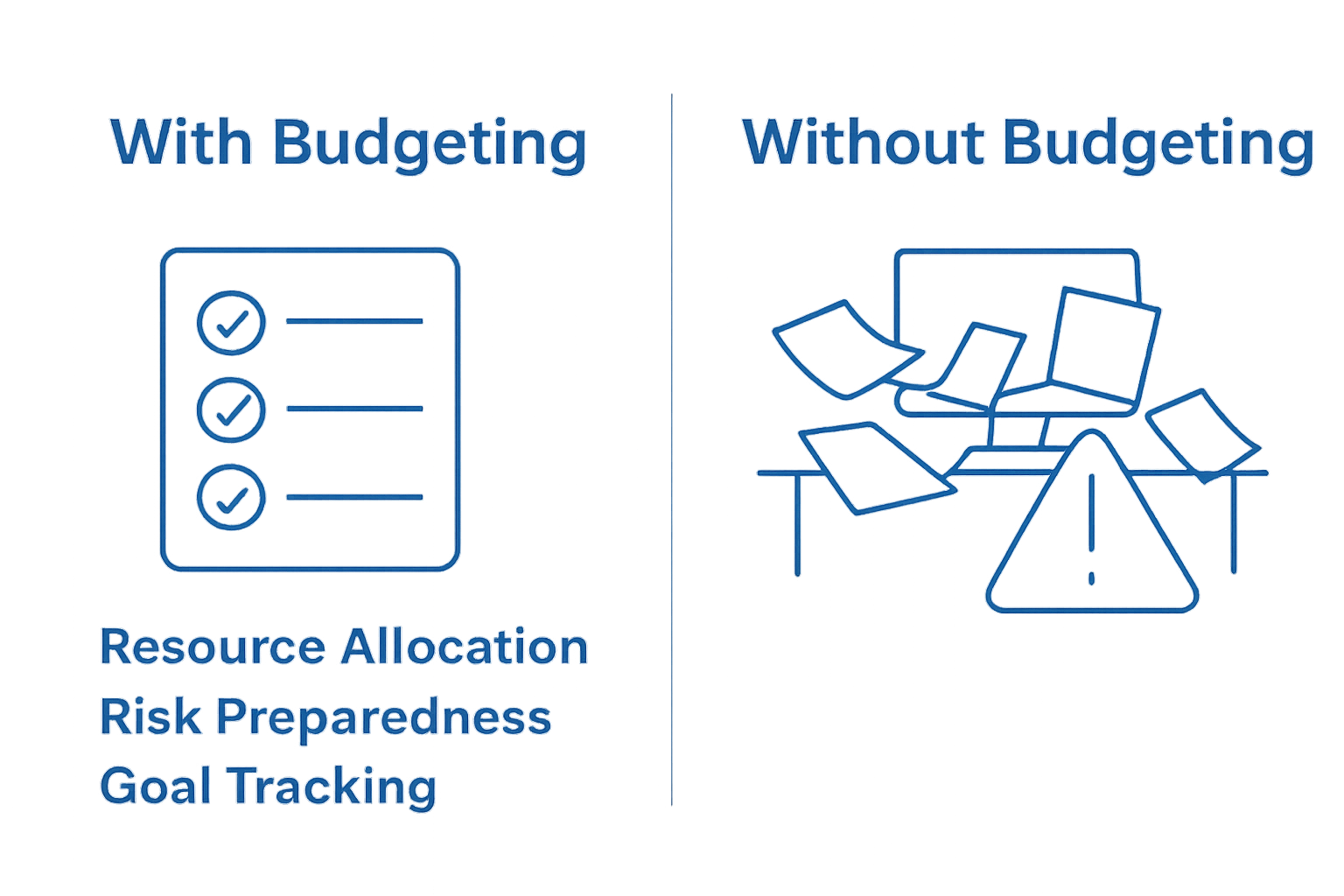
Business budgeting transcends basic financial tracking – it is a strategic blueprint for sustainable organisational growth. For South African enterprises navigating complex economic landscapes, a robust budget becomes a critical instrument of financial strategy and resilience.
Strategic Resource Allocation
According to the South African government’s 2025 Budget Report, effective budgeting directly correlates with economic development by strategically directing resources towards activities that stimulate growth. Businesses that implement disciplined budgeting can:
- Prioritize high-potential investment opportunities
- Minimize unnecessary expenditure
- Create financial buffers for unexpected challenges
- Optimize resource deployment across different business units
Financial Performance and Predictability
A comprehensive budget transforms financial uncertainty into calculated planning. By exploring detailed financial management strategies, businesses can develop predictive models that anticipate potential revenue streams, manage cash flow risks, and create sustainable growth pathways.
Budgeting provides a systematic approach to understanding financial dynamics. Precise financial forecasting enables businesses to:
- Identify potential revenue gaps
- Develop contingency plans
- Make data-driven investment decisions
- Attract potential investors through financial transparency
For small and medium enterprises in South Africa, budgeting represents more than numerical exercise – it is a strategic tool for navigating economic complexities. By establishing clear financial parameters, businesses can create realistic growth strategies, manage risk effectively, and build long-term financial stability.
Ultimately, business budgeting is about transforming financial potential into tangible growth opportunities, ensuring that every rand invested contributes meaningfully to the organisation’s strategic objectives.
Navigating Financial Decisions: How Budgeting Works
Business budgeting is a dynamic process that requires strategic thinking, detailed analysis, and continuous refinement. Far from being a static document, a budget serves as a living financial roadmap that adapts to changing business environments and economic conditions.
Establishing Financial Parameters
According to a University of Pretoria research study, effective budgeting involves comprehensive insights from both financial and non-financial managers. The process begins by establishing clear financial parameters that outline:
- Anticipated revenue streams
- Projected operational expenses
- Capital investment requirements
- Potential risk mitigation strategies
Budget Development and Implementation
Developing a robust budget requires meticulous attention to detail and strategic financial planning techniques. Businesses must systematically evaluate historical financial performance, current market conditions, and future growth projections to create an accurate financial blueprint.
Key components of successful budget implementation include:
- Regular financial performance tracking
- Quarterly budget reviews and adjustments
- Transparent communication across organizational departments
- Alignment with broader strategic business objectives
Financial forecasting transforms budgeting from a compliance exercise into a strategic management tool. By integrating data-driven insights and maintaining flexibility, businesses can navigate complex economic landscapes with greater confidence and precision.

Ultimately, effective budgeting is about creating a responsive financial framework that supports informed decision-making, enables agile resource allocation, and positions the organization for sustainable growth and resilience.
Key Concepts in Business Budgeting You Should Know
Business budgeting encompasses a complex set of financial principles and strategies that go beyond simple number crunching. Understanding these fundamental concepts is crucial for creating a robust and effective financial management approach.
Budgeting Approaches and Techniques
According to the Education and Training Unit, businesses can employ various budgeting methodologies to suit their unique operational needs. These approaches include:
Below is a comparison of common business budgeting approaches mentioned in the article, outlining their key features and ideal use cases for South African businesses.
| Budgeting Approach | Main Feature | Best For |
|---|---|---|
| Incremental Budgeting | Adjusts previous budgets incrementally | Stable businesses with predictable spending |
| Zero-Based Budgeting | Builds budget from scratch each cycle | Cost control and evaluating all expenditures |
| Performance-Based Budgeting | Links spend to specific organisational objectives | Outcome-driven departments or programmes |
| Rolling Budget | Regularly updates budget during the year | Dynamic environments needing flexibility |
- Incremental Budgeting: Adjusting previous budget figures by a set percentage
- Zero-Based Budgeting: Rebuilding the entire budget from zero each cycle
- Performance-Based Budgeting: Aligning financial allocations with specific organizational goals
- Rolling Budget: Continuously updating the budget as the year progresses
Core Financial Parameters
Effective budgeting requires a comprehensive understanding of key financial parameters. Exploring advanced budgeting strategies reveals several critical components that businesses must carefully consider:
- Revenue Projections: Estimating potential income streams
- Fixed and Variable Expenses: Understanding consistent and fluctuating costs
- Cash Flow Management: Tracking money movement within the organization
- Contingency Planning: Creating financial buffers for unexpected challenges
Financial forecasting transforms these concepts from theoretical constructs into practical tools. By understanding the intricate relationship between different financial elements, businesses can develop more accurate and responsive budgeting strategies.
Ultimately, mastering these key budgeting concepts empowers businesses to make informed financial decisions, optimize resource allocation, and create a solid foundation for sustainable growth and financial resilience.
Transform Your Business with Expert Budgeting Support
Are you struggling to turn your business budget from a theoretical plan into a source of real growth and predictability? The article you have just read highlights the crucial need for effective financial planning, cash flow clarity and agile resource allocation in South African businesses. These are the exact pain points that often trip up even the most dedicated entrepreneurs, leading to uncertainty and missed opportunities.

Ready Accounting knows every business needs more than just a basic budget template. You need strategic guidance, hands-on support and tools that actually save you time. Our team specialises in business budgeting solutions grounded in South African realities. We help you set clear milestones, align money with your goals and use technology to simplify your journey. Take the next step today and see how Ready Accounting can help you strengthen your finances, unlock sustainable growth and build resilience—starting with a no-obligation consultation. Your proactive financial management begins right here.
Frequently Asked Questions
What is business budgeting?
Business budgeting is a financial planning tool that outlines an organization’s expected income and expenses for a specific period, helping to map out its financial trajectory and make strategic decisions.
Why is business budgeting important for small businesses?
Business budgeting is crucial for small businesses as it provides clear financial visibility, enables precise resource allocation, and supports strategic planning, helping entrepreneurs navigate economic uncertainties and achieve sustainable growth.
What are the key components of an effective budget?
An effective budget includes anticipated revenue streams, projected operational expenses, capital investment requirements, and risk mitigation strategies to ensure a comprehensive financial blueprint.
What budgeting approaches can businesses use?
Businesses can adopt various budgeting methodologies, including incremental budgeting, zero-based budgeting, performance-based budgeting, and rolling budgets, depending on their operational needs and objectives.