

Forensic Analysis of the Importance of Management Accounts
Management accounts often get called the backbone of smart business decisions. They dig deeper than standard reports you hand to the taxman and reveal what is really happening with your money right now. But many people miss how much power is inside these numbers. Businesses that use management accounts consistently see better efficiency and spot risks sooner according to the Small Business Administration. This is not just paperwork. It is a real edge for any business wanting to move ahead.
Table of Contents
- What Are Management Accounts And Their Key Components?
- Why Management Accounts Matter For Business Growth
- How Management Accounts Facilitate Informed Decision-Making
- The Practical Applications Of Management Accounts In Real Life
- Key Concepts To Understand When Leveraging Management Accounts
Quick Summary
| Takeaway | Explanation |
|---|---|
| Management accounts aid strategic planning. | They provide detailed insights that support crafting robust financial strategies for business success. |
| Real-time data enhances decision-making. | Accessing immediate financial performance data allows leaders to adapt strategies promptly based on current conditions. |
| Identify cost saving opportunities effectively. | Management accounts help pinpoint areas where expenses can be reduced, improving overall profitability. |
| Facilitate performance monitoring. | These accounts allow businesses to track and evaluate the performance of different departments consistently. |
| Transform data into actionable insights. | By analyzing management accounts, leaders convert complex financial information into clear, strategic directives for growth. |
What Are Management Accounts and Their Key Components?
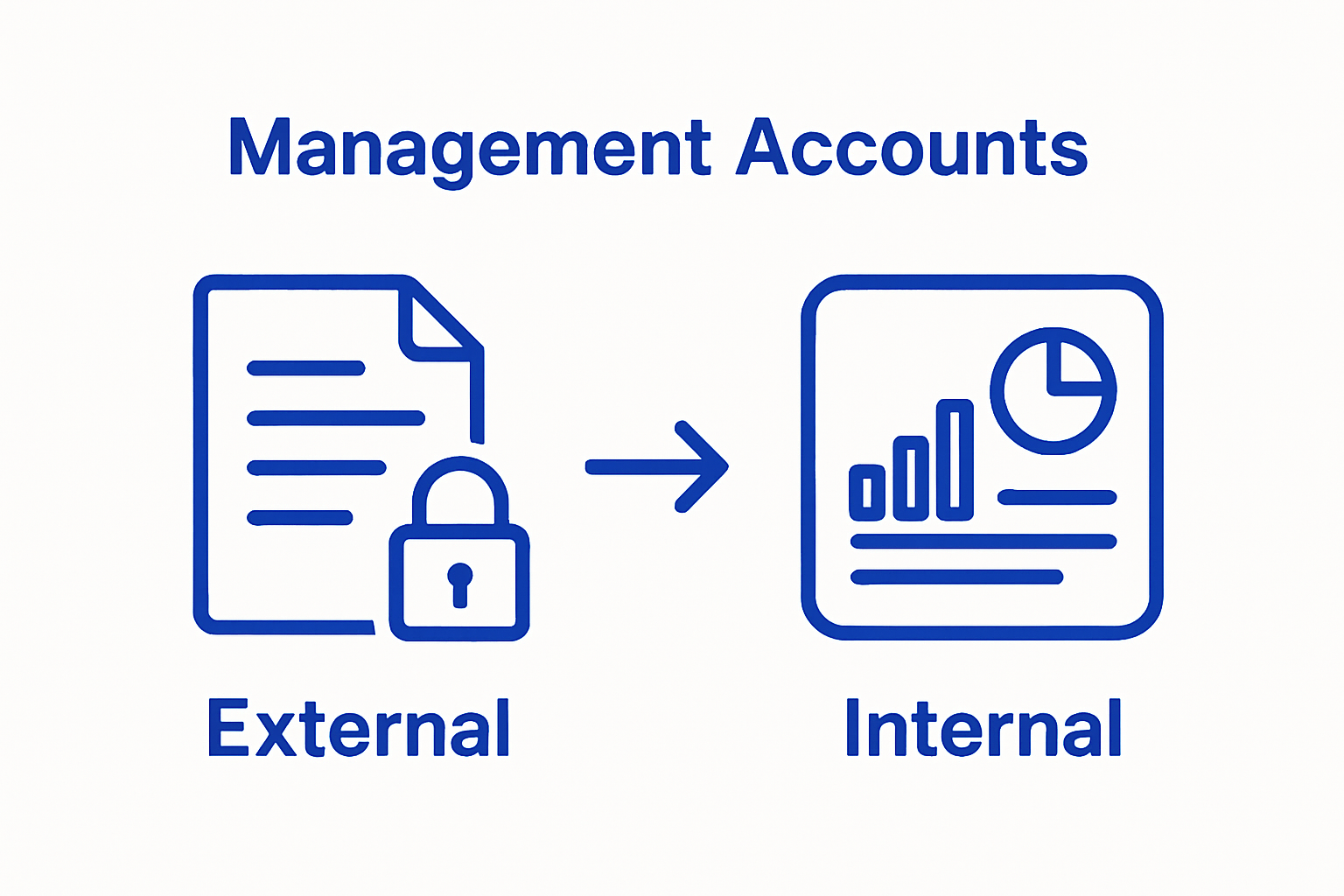
Management accounts represent critical financial documents that provide businesses with comprehensive insights into their financial performance and strategic decision-making capabilities. Unlike standard financial statements prepared for external stakeholders, management accounts are exclusively designed for internal use, offering detailed, real-time financial analysis that supports executive leadership and operational planning.
Understanding the Core Structure
At their essence, management accounts comprise several interconnected financial components that collectively paint a holistic picture of a company’s financial health. Learn more about financial reporting techniques that complement management accounting practices.
The key components typically include:
- Income Statement: Detailed breakdown of revenue streams and expenditure categories
- Cash Flow Statement: Tracking actual cash movements within the business
- Balance Sheet: Snapshot of assets, liabilities, and equity at a specific point in time
Purpose and Strategic Value
According to research from the International Monetary Fund, management accounts serve multiple critical functions for businesses. They enable management to:
- Analyze financial performance in granular detail
- Identify potential cost-saving opportunities
- Make data-driven strategic decisions
- Monitor and evaluate departmental performance
- Develop accurate financial forecasts and budgets
Unlike traditional financial reporting, management accounts offer flexible, customized reporting that directly addresses an organization’s unique informational needs.
To clarify the distinct purposes and values of management accounts compared to standard financial statements, here is a concept comparison table that summarises their internal versus external focus and strategic impact.
| Aspect | Management Accounts | Standard Financial Statements |
|---|---|---|
| Primary Audience | Internal (management and decision-makers) | External (shareholders, tax authorities, regulators) |
| Timeframe | Real-time or monthly | Annually or bi-annually |
| Detail Level | Highly detailed, tailored to business needs | Summarised, follows regulatory standards |
| Purpose | Operational planning, strategic decision-making, performance monitoring | Legal compliance, external reporting, historical performance |
| Flexibility | Customisable reports | Standardised format |
| Value for Business Growth | High – provides actionable insights for efficiency and opportunity | Moderate – ensures accountability and compliance |
| Example Components | Departmental analysis, cash flow forecasting, variance tracking | Profit & loss, balance sheet, cash flow statement |
Below is a summary table highlighting the key components of management accounts and their specific functions, making it easier to quickly understand what each element tracks or reveals.
| Component | Description | Function in Management Accounts |
|---|---|---|
| Income Statement | Shows revenue, expenses, and profit for a period | Tracks profitability and revenue generation |
| Cash Flow Statement | Records cash inflows and outflows | Monitors liquidity and operational cash cycles |
| Balance Sheet | Snapshot of assets, liabilities, and equity | Assesses financial position at a given time |
| Departmental Reports | Financial results by department or division | Evaluates individual business unit performance |
| Variance Analysis | Compares actual vs. budgeted figures | Identifies discrepancies for corrective action |
Why Management Accounts Matter for Business Growth
Management accounts serve as powerful strategic tools that transform financial data into actionable insights, directly supporting business growth and sustainable development. By providing comprehensive financial visibility, these specialized reports enable businesses to make informed decisions, allocate resources effectively, and anticipate potential challenges before they become critical.
Strategic Financial Planning
Explore our comprehensive guide to management accounting to understand how these financial tools drive business success. Management accounts enable businesses to develop robust financial strategies by offering detailed perspectives on financial performance. They help organizations:
- Identify emerging revenue opportunities
- Pinpoint potential cost reduction areas
- Assess investment feasibility
- Monitor financial health in real-time
- Create accurate financial projections
Performance Optimization and Risk Management
According to research from the Small Business Administration, businesses that consistently utilize management accounts experience significant advantages in operational efficiency and strategic planning. These accounts provide a granular view of financial performance across different business segments, allowing leadership to:
- Understand precise profit margins
- Evaluate departmental performance
- Detect potential financial risks early
- Make data-driven resource allocation decisions
- Develop targeted growth strategies
By translating complex financial data into clear, actionable insights, management accounts become essential navigational tools for businesses seeking sustainable growth. They bridge the gap between raw financial information and strategic decision-making, empowering business leaders to proactively shape their organization’s financial future.

How Management Accounts Facilitate Informed Decision-Making
Informed decision-making stands as the cornerstone of successful business management, and management accounts play a pivotal role in transforming complex financial data into actionable strategic insights. By providing comprehensive, detailed financial information, these specialized reports enable business leaders to navigate complex financial landscapes with confidence and precision.
Translating Financial Data into Strategic Insights
Dive deeper into management accounting strategies and understand how financial data becomes a powerful decision-making tool. Management accounts go beyond traditional financial reporting by offering:
- Granular performance analysis
- Predictive financial modeling
- Real-time financial health assessments
- Comprehensive cost-benefit evaluations
- Comparative performance metrics
Strategic Planning and Risk Mitigation
According to research from William & Mary University, management accountants play a critical role in transforming raw financial data into strategic guidance. They help organizations:
- Forecast potential financial scenarios
- Identify emerging business opportunities
- Evaluate investment potential
- Detect and mitigate financial risks
- Optimize resource allocation
By providing a nuanced, multidimensional view of financial performance, management accounts enable business leaders to move beyond reactive financial management. They support proactive strategic planning, helping organizations anticipate challenges, capitalize on opportunities, and maintain a competitive edge in dynamic business environments.
The Practical Applications of Management Accounts in Real Life
Management accounts transcend theoretical financial frameworks, offering tangible, practical solutions that address real-world business challenges. By transforming complex financial data into actionable insights, these specialized reports become indispensable tools for businesses navigating dynamic economic landscapes.
Business Performance Optimization
Explore practical financial statement strategies to understand how management accounts drive operational excellence. In practical scenarios, these accounts enable businesses to:
- Track departmental performance metrics
- Identify revenue generation opportunities
- Benchmark against industry standards
- Allocate resources strategically
- Minimize unnecessary expenditures
Decision-Making in Practical Contexts
According to research from UC Berkeley Extension, management accounts provide critical insights across various business scenarios. Real-life applications include:
- Evaluating potential business expansion
- Assessing product line profitability
- Analyzing cost structures in manufacturing
- Determining pricing strategies
- Measuring return on investment for specific projects
By converting raw financial data into meaningful, contextual information, management accounts empower business leaders to make informed decisions. They act as strategic navigational tools, helping organizations anticipate challenges, capitalize on opportunities, and maintain competitive advantage in increasingly complex business environments.
Key Concepts to Understand When Leveraging Management Accounts
Management accounts represent sophisticated financial tools that require a nuanced understanding of several fundamental concepts. By mastering these core principles, businesses can transform raw financial data into strategic insights that drive meaningful organizational growth and performance optimization.
Fundamental Financial Performance Metrics
Learn more about interpreting financial statements and understand the essential metrics that power management accounting. Key performance indicators include:
- Contribution margin analysis
- Break-even point calculations
- Cost behavior classifications
- Activity-based costing strategies
- Variance analysis techniques
Strategic Performance Evaluation Frameworks
According to research from OpenStax, management accounting operates through three critical responsibilities:
- Planning organizational objectives
- Controlling operational processes
- Evaluating performance against established benchmarks
These strategic frameworks enable businesses to develop comprehensive approaches to financial management, moving beyond simple number tracking to create dynamic, responsive financial strategies. By understanding these foundational concepts, organizations can leverage management accounts as powerful tools for continuous improvement and strategic decision-making.
Transform Your Management Accounts Into Smart Decisions with Ready Accounting
Are you feeling frustrated by financial reports that do not give you clear answers? If you relate to the common pain points in the article like struggling to turn complex management accounts into practical insights or battling with outdated information that lags behind your business needs, you are not alone. Many South African business owners want to make better decisions using real-time, relevant financial data. At Ready Accounting, we specialise in bridging that gap. Our focus on cloud accounting and automated solutions is designed to deliver the strategic value and nuanced financial analysis your management accounts promise, but often fail to deliver in practice.

Stop letting uncertainty hold back your business growth. Visit Ready Accounting for a tailored consultation and see real examples of how our specialised accounting solutions can help you gain control, optimise performance and achieve your financial goals. Take action now and unlock the full power of management accounts to shape your future with confidence.
Frequently Asked Questions
What are management accounts?
Management accounts are internal financial documents that provide detailed insights into a company’s financial performance, enabling executive leadership to make informed decisions. Unlike external financial statements, management accounts focus on real-time financial analysis tailored for internal use.
What are the key components of management accounts?
The key components of management accounts typically include an income statement, cash flow statement, and balance sheet. Together, these documents offer a comprehensive view of the organization’s financial health and performance metrics.
How do management accounts support strategic decision-making?
Management accounts help in strategic decision-making by providing granular performance analysis, real-time financial health assessments, and predictive modeling. This enables business leaders to identify opportunities, manage risks, and optimize resource allocation efficiently.
Why are management accounts important for business growth?
Management accounts are crucial for business growth as they transform financial data into actionable insights, allowing companies to allocate resources effectively, anticipate challenges, and identify growth opportunities. They facilitate informed decision-making and strategic planning to enhance operational efficiency.