

Why budgeting matters for South African SME growth
Executive Summary
- Budgeting provides South African SMEs with critical cash flow visibility and financial control.
- Key budget types include sales, cash, operating, capital expenditure, and marketing budgets.
- Regular review and flexible management of budgets enhance decision-making and business resilience.
Budgeting is one of those business practices most SME owners know they should do but somehow keep postponing. Many assume it is a corporate exercise, something reserved for companies with dedicated finance teams and complex reporting structures. The data tells a different story. Research from manufacturing SMEs in the Cape Metropole shows that the majority of small businesses already use budgets to manage their finances, and those that do gain a measurable edge in decision-making and financial control. This guide breaks down why budgeting works, which budget types matter most, and how to put a practical system in place today.
Table of Contents
- Why budgeting matters for South African SMEs
- Types of budgets and their real-world application
- Common budgeting challenges for SMEs
- Practical steps to implement effective budgeting
- A fresh perspective on budgeting for SMEs
- Tools and support to make budgeting easier
- Frequently asked questions
Key Takeaways
| Point | Details |
|---|---|
| Budgeting boosts SME growth | Most successful South African SMEs achieve more by making budgeting a core management tool. |
| Cash and sales budgets are essential | Sales and cash flow planning are the most widely used and impactful budgets for SMEs. |
| Start simple, improve over time | Overcome common hurdles by focusing on basic budgets first and refining your process as your business grows. |
| Keep a cash reserve | Having at least three months’ operating expenses in reserve dramatically increases your business’s resilience. |
Why budgeting matters for South African SMEs
A budget is not a prediction of the future. It is a financial plan that maps out expected income and expenditure over a given period, usually monthly or annually. For South African SMEs, where cash flow pressure is constant and economic conditions shift quickly, a budget gives you the ability to see problems before they become crises.
Think of a budget as your business’s early warning system. When actual revenue falls short of what you planned, your budget flags it immediately. Without one, many owners only realise there is a problem when suppliers start calling or staff salaries are at risk. That reactive mode is expensive and stressful. A budget puts you in a proactive position instead.
The core benefits for SMEs in the South African context are concrete and worth spelling out:
- Cash flow visibility: You know what money is coming in, when it will arrive, and what needs to go out. This prevents the most common SME killer, which is running out of cash even while the business is technically profitable.
- Smarter decision-making: When a supplier offers you a bulk discount, your budget tells you whether you can afford it. Without a budget, that decision is a gamble.
- Growth planning: Setting financial goals becomes meaningful when you have a baseline. A budget shows you what capacity you actually have to invest in new staff, equipment, or marketing.
- Expense control: Knowing your planned spend makes it far easier to manage expenses during slow periods without making cuts that damage the business.
- Accountability: A budget creates shared expectations across your team. When everyone knows the targets, spending decisions become easier and more consistent.
The South African SME environment adds specific layers of complexity. Load shedding, fluctuating fuel costs, rand volatility, and inconsistent demand cycles all create unpredictable pressure on margins. A budget does not eliminate these risks, but it gives you the framework to respond to them rationally rather than emotionally.
Research on SME budget adoption rates found that 84.2% of SMEs use sales budgets and 71.1% use cash budgets, with most reporting that budgets are a key management tool for their business.
The connection between budgeting and sustainable financial growth is not accidental. Businesses that plan financially are more likely to spot growth opportunities and less likely to make reactive decisions that erode profitability over time.
Types of budgets and their real-world application
Most SME owners think a budget is a single spreadsheet with income on one side and expenses on the other. In practice, different budget types serve very different purposes. Understanding which ones apply to your business is the first step to building a system that actually works.
Sales and cash budgets are the most commonly used among South African SMEs, and for good reason. They address the two most immediate concerns: revenue generation and liquidity.
| Budget type | Adoption rate (SMEs) | Primary purpose |
|---|---|---|
| Sales budget | 84.2% | Forecasting revenue by product or period |
| Cash budget | 71.1% | Tracking actual cash inflows and outflows |
| Operating budget | ~60% | Planning day-to-day operational expenses |
| Capital expenditure budget | ~45% | Planning major asset purchases |
| Marketing budget | ~40% | Allocating spend on growth and customer acquisition |
Each of these budget types serves a specific function in your overall financial picture. Together they form the financial statement basics layer that underpins sound business management.
Here is how each one plays out in real SME situations:
- Sales budget: A Cape Town-based wholesale distributor uses a sales budget to project monthly revenue per product line. When one line underperforms in Q1, they can reallocate stock investment to stronger performers before Q2 begins.
- Cash budget: A Johannesburg service business with 60-day payment terms uses a cash budget to identify the two-week window each month when outflows exceed inflows. They arrange a short-term overdraft to cover that gap rather than scrambling last minute.
- Operating budget: A Durban-based manufacturer tracks electricity, raw materials, and staff costs monthly against their operating budget. When load shedding drives generator costs up, the variance is spotted immediately and adjustments are made.
- Capital expenditure budget: A logistics SME in Pretoria plans equipment replacement two years in advance using a capital expenditure budget, avoiding the cash shock of unplanned large purchases.
- Marketing budget: A retail SME allocates a fixed monthly percentage of revenue to digital marketing. This approach is well explained in marketing budget planning guides for small businesses looking to grow customer acquisition systematically.
For creating a budget from scratch, starting with the sales and cash budgets gives you the most immediate impact for the least effort.
Pro Tip: If your business is just starting out with formal budgeting, build your sales and cash budgets first. Once those are running smoothly for two or three months, layer in your operating budget. Do not try to implement all budget types at once or you will lose momentum.
Common budgeting challenges for SMEs
Understanding budget types is one thing. Actually building and maintaining budgets is where most SMEs run into real difficulty. The obstacles are predictable, and knowing them in advance makes them far easier to overcome.
Common budgeting challenges South African SMEs face include:
- Lack of financial expertise: Many SME owners started their businesses as tradespeople, engineers, or creatives. Managing a budget requires a different skill set, and there is often no one on the team to fill that gap.
- Time pressure: Running a small business consumes most of your day. Setting aside time for financial planning feels like a luxury when the phones are ringing and orders need to go out.
- Inconsistent record keeping: A budget is only as good as the data behind it. If invoices go unrecorded and expenses are not tracked consistently, any budget you create will be inaccurate and useless.
- Fear of complexity: Many owners have looked at budgeting templates and found them overwhelming. This leads to paralysis where no budget gets created at all.
- Compliance anxiety: Some SMEs conflate budgeting with tax compliance, fearing that having a formal budget somehow increases SARS scrutiny. These are separate things.
The challenge is most acute for micro and very small enterprises. Research shows that micro and very small SMEs are significantly less likely to use budgets than medium-sized ones, which exposes them to higher financial risk precisely when they are most vulnerable. The high SME failure rate in South Africa underlines why this matters. Businesses without budgets cannot see financial trouble coming.
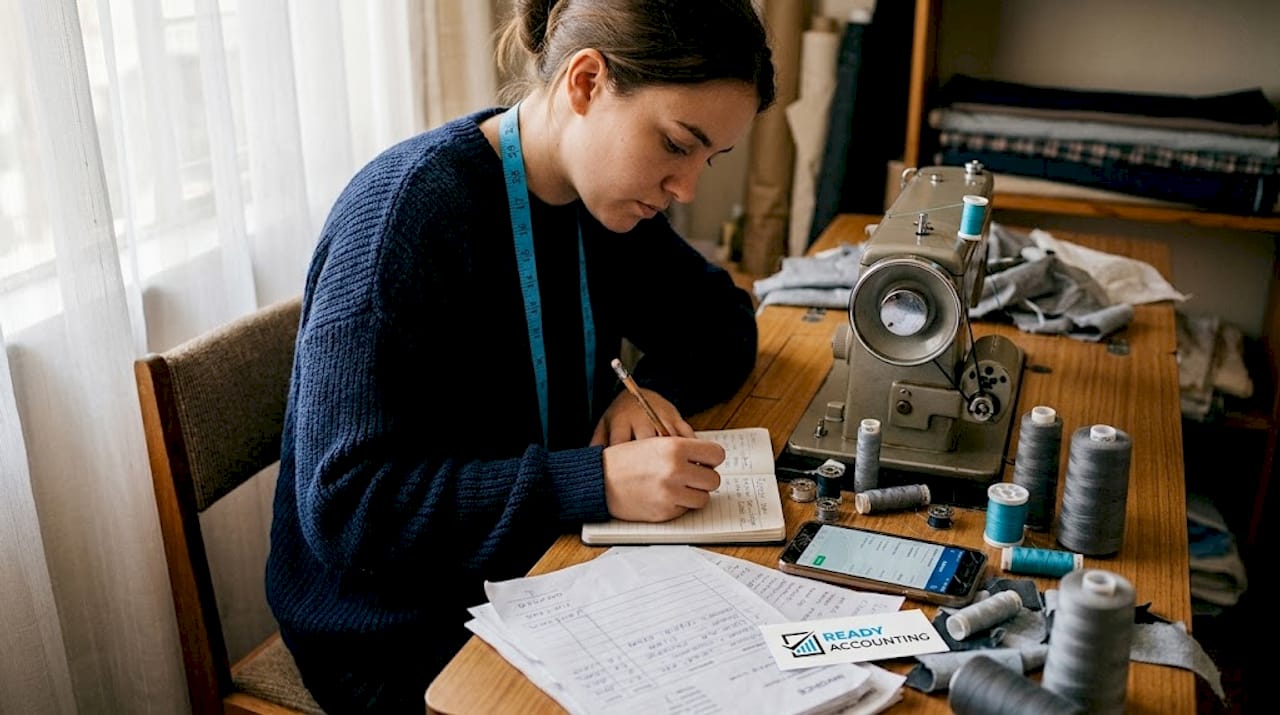
Good financial forecasting starts with simple, consistent data collection. You do not need sophisticated software to begin. A basic spreadsheet tracking monthly income and fixed costs is a meaningful starting point.
Practical ways to start budgeting even when you are short on time or expertise:
- Use your last three months of bank statements to create your first budget baseline. You already have the data.
- Block two hours per month in your calendar as non-negotiable budget review time. Treat it like a client meeting.
- Hire a part-time bookkeeper before you feel you can afford one. The cost is almost always recovered in better financial decisions.
- Start with a zero-based approach: list every expense from scratch each quarter rather than just copying last year’s numbers.
Pro Tip: Financial resilience research suggests keeping a minimum cash reserve of at least three months of operating expenses. This buffer gives your business breathing room to absorb unexpected costs without emergency decision-making that damages long-term growth.
Practical steps to implement effective budgeting
With a clear picture of the challenges, here is a straightforward roadmap to get your budgeting process running. The goal is not perfection in month one. The goal is a functional system that improves each quarter.
Most SMEs that use budgets report that they help with management and financial decision-making across the business. The process does not have to be complicated to be effective.
- Set clear financial goals: Before you build any numbers, decide what you want the budget to help you achieve. Are you trying to protect cash flow? Grow revenue by 20%? Reduce waste in a specific department? Your goals shape your budget structure.
- Gather your baseline data: Pull together your last six months of actual income and expenses. This gives you a realistic starting point rather than guesswork. Review your financial statement examples if you need a reference point for organising this data.
- Build your sales forecast first: Estimate expected monthly revenue based on historical trends, confirmed contracts, and seasonal patterns. Be conservative. It is better to be pleasantly surprised than to overplan.
- Map your fixed and variable costs: Fixed costs stay constant regardless of sales volume. Variable costs change with activity. Knowing which is which helps you understand your break-even point and your minimum viable revenue target.
- Create your cash flow budget: Even if your sales forecast is strong, cash timing matters. A business can be profitable on paper and insolvent in practice. Map when money actually lands in your account versus when bills are due.
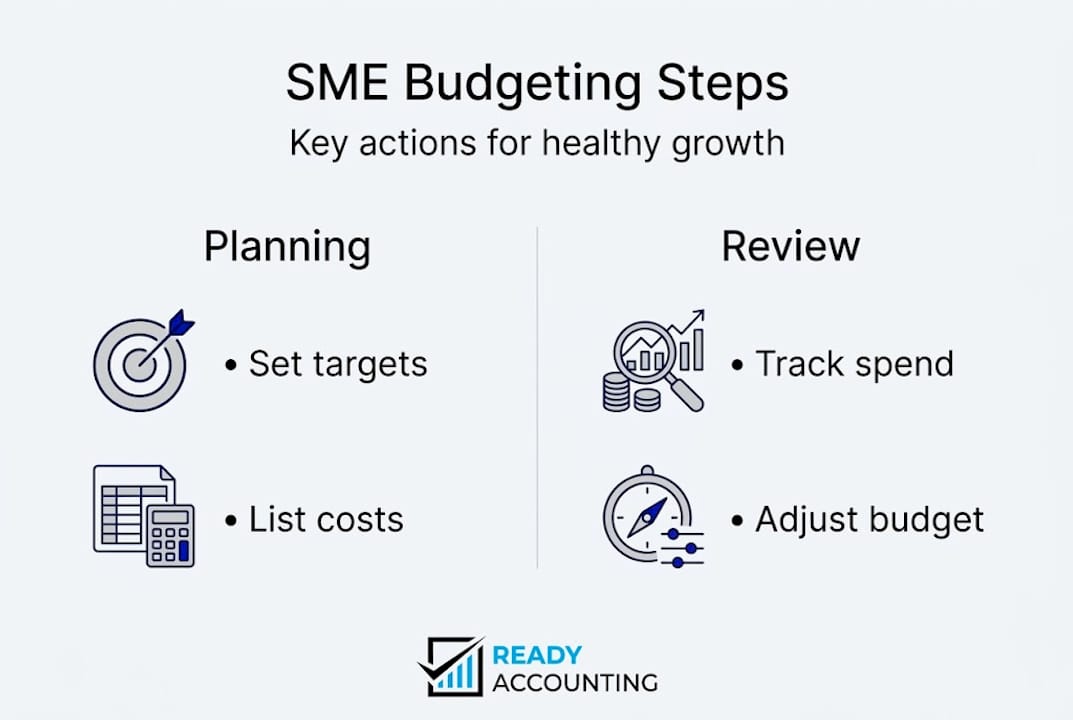
- Review monthly and adjust quarterly: A budget that never gets reviewed is decoration. Block time each month to compare actual versus planned figures. Every quarter, adjust your projections based on what you have learned.
| Approach | Manual budgeting | Automated budgeting |
|---|---|---|
| Setup time | High | Moderate |
| Accuracy | Variable, human error risk | High, real-time data |
| Monthly time investment | 4 to 8 hours | 1 to 2 hours |
| Cost | Low upfront | Subscription based |
| Scalability | Limited | Scales with business |
| Best for | Early-stage, very simple businesses | Growing SMEs with complex cash flows |
Automation removes a significant portion of the manual effort from budgeting. Cloud-based accounting platforms that connect directly to your bank accounts mean your actuals are always up to date. When combined with financial statement basics, automated budgeting transforms from a time-consuming task into a real-time management tool.
A fresh perspective on budgeting for SMEs
Here is something most budgeting guides will not tell you. The most dangerous thing about a rigid budget is not that it is wrong. It is that it makes you feel certain when the situation demands flexibility. South African SMEs operate in one of the most unpredictable business environments on the continent. A budget that cannot bend will break your confidence in the whole process.
The businesses we see succeed over time treat their budgets as living tools. They review them regularly, they argue with the numbers, and they adjust without guilt when reality diverges from the plan. That is not poor financial discipline. That is sophisticated financial management.
What most owners miss is that the act of reviewing a budget that is off target is actually where the value is generated. The variance tells you something true about your business that your gut instinct cannot. Was the revenue shortfall because of a market shift or a sales execution problem? Was the cost overrun a one-off or a structural issue? Those answers come from engaging with step-by-step budgeting advice consistently, not from building a perfect budget once and filing it away.
The stereotype that budgets limit opportunity gets it backwards. A well-maintained budget is exactly what tells you when you can take a risk, because you can see clearly what you have in reserve and what the downside looks like.
Tools and support to make budgeting easier
At Ready Accounting, we have seen firsthand how the right infrastructure removes the friction that stops most SMEs from budgeting consistently. Our clients use accounting automation benefits to replace manual data entry with real-time financial dashboards that make monthly budget reviews take minutes, not hours. We help SMEs build custom cloud systems that connect their sales, expenses, and banking data in one place, giving owners the visibility they need to make confident decisions. Whether you want to reduce tax liability or understand your runway in real time using our burn rate calculator, we provide the tools and expert partnership to make budgeting a genuine competitive advantage.
Frequently asked questions
What is the first step in creating a business budget?
Start by identifying your core expenses and revenue sources from the last three to six months, then set specific financial goals that you want the business to reach in the next twelve months.
Why are micro or very small businesses less likely to use budgets?
Micro SMEs often lack the time or expertise to budget formally, but this significantly increases their financial vulnerability and the risk of cash flow failure during slow periods.
How much cash reserve should my SME hold?
Aim to keep at least three months of operating expenses as a minimum cash reserve to protect your business against unexpected disruptions.
Which budget types do most South African SMEs use?
Most South African SMEs rely on sales and cash budgets, with 84.2% using sales budgets and 71.1% using cash budgets to manage their finances effectively.